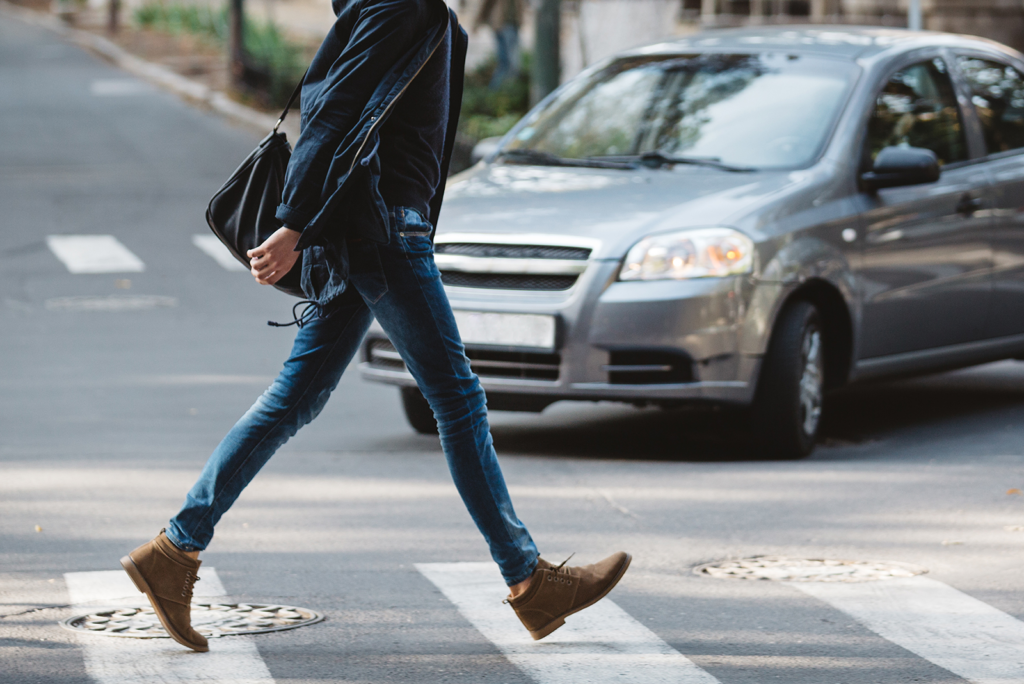
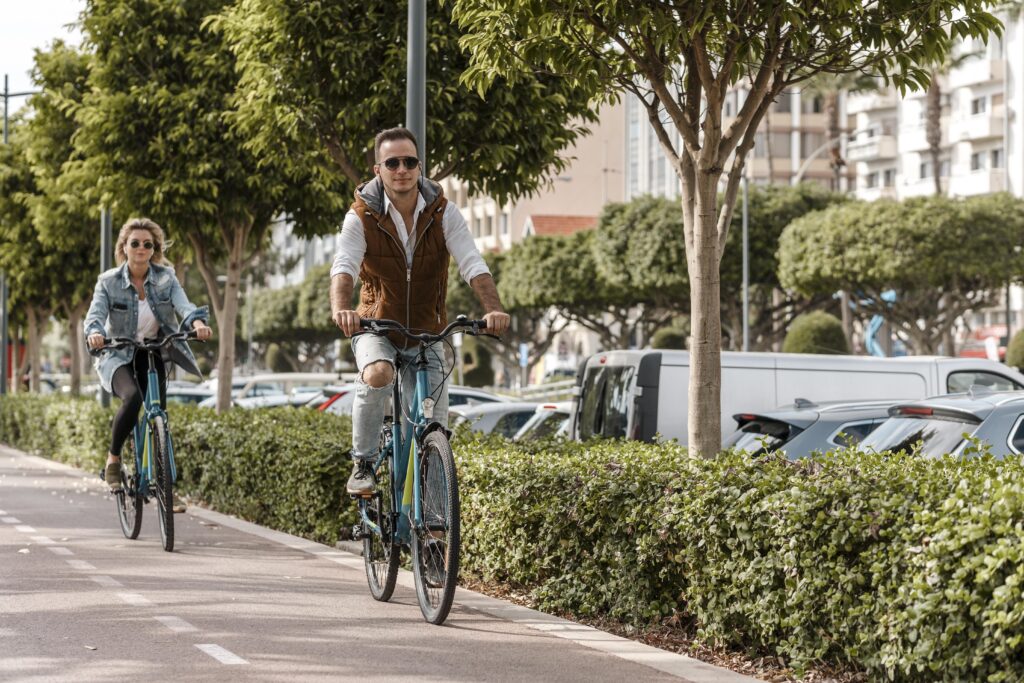
Summer puts more people on foot and on bikes across Pleasanton, on downtown sidewalks, along Stoneridge and Santa Rita, and at the points where the Iron Horse Trail crosses city streets at grade. It also means more collisions between drivers and the people most exposed to harm. If a driver hits you while you are walking or riding, the legal questions come fast: was the driver at fault, what happens when the driver says you stepped out or rode out unpredictably, and whose insurance actually pays.
Here is the short answer, then the details. A driver who fails to yield or drives carelessly is usually liable, even at a trail crossing. California’s comparative fault rule means that even if you share some blame, you can still recover, with your compensation reduced by your share rather than erased. And the money can come from more than just the driver’s policy: your own auto coverage may help, especially if the driver has little insurance or flees.
The driver’s duty, and what the law actually says
California law puts a clear duty on drivers around people on foot. Under California Vehicle Code section 21950, a driver must yield the right-of-way to a pedestrian crossing the roadway within any marked crosswalk, or within an unmarked crosswalk at an intersection. A driver approaching a person in a crosswalk must also slow down and use all due care to keep them safe. When a driver violates that duty and causes a crash, the violation can establish negligence, the foundation of the injury claim.
The same statute is realistic about pedestrians, and this is the part insurers seize on. Section 21950 also says a pedestrian must use due care and may not suddenly leave a curb and walk into the path of a vehicle that is so close as to be an immediate hazard. But it expressly adds that a pedestrian’s misstep does not relieve the driver of the duty to drive carefully. In plain terms, both people owe care, and the driver’s duty does not disappear because the pedestrian made a mistake.
Cyclists fit into this framework too. Under California Vehicle Code section 21200, a person riding a bicycle on the road generally has the same rights and duties as the driver of a vehicle. So a cyclist crossing where the Iron Horse Trail meets a street is judged by the rules of the road, and a driver who fails to yield or turns into a rider can be just as liable as in a car-on-car crash.
“You stepped out” or “you rode out”: how comparative fault really works
Almost every pedestrian and bike case where the driver disputes blame turns into the same fight: the driver and insurer argue you darted out, crossed against the signal, rode out from the trail without looking, or were distracted. Here is what California law actually does with that.
California follows a pure comparative fault rule. Each party is assigned a percentage of responsibility, and your recovery is reduced by your percentage, but it is not eliminated, even if your share is large. If you are found 30 percent at fault and your damages are a given amount, you recover 70 percent of them. This is one of the more injury-friendly fault rules in the country, and it is why an insurer’s first move, blaming the injured person, does not end the claim the way they suggest.
Two points matter when the driver blames you. First, a driver who was speeding, distracted, or otherwise careless can carry significant fault even when the pedestrian or cyclist also erred, because the driver’s own duty of due care never went away. Second, where you were crossing changes the starting point but not the outcome. A person crossing outside a crosswalk generally must yield to vehicles under Vehicle Code section 21954, yet the driver still owes due care, and a negligent driver can still be liable. It is also worth knowing that California decriminalized most jaywalking in 2023, so crossing location by itself no longer automatically makes a pedestrian negligent; the question is whether the crossing was done with reasonable care.
Because fault here is a percentage, not a yes-or-no, the evidence that fixes those percentages is the whole game. That is what the next sections are about.
Where the money comes from
A serious pedestrian or bike injury often costs far more than a single insurance policy covers, so identifying every source matters.
The starting point is the at-fault driver’s liability insurance, which covers a pedestrian or cyclist the driver hits. But California’s minimum limits are low, and a severe injury can exceed them quickly.
That is where your own auto insurance can matter, even though you were on foot or on a bike. Uninsured and underinsured motorist (UM/UIM) coverage on your household auto policy often applies when you are hurt as a pedestrian by a driver who has no insurance or too little, and in many hit-and-run situations where the driver flees. For cyclists, whether your own UM/UIM reaches a bicycle crash depends on your specific policy, so it is worth having the policy reviewed rather than assumed. Other layers can include MedPay coverage for early medical bills and your health insurance, and in some cases a commercial policy if the driver was working at the time.
Finally, a public entity can sometimes share responsibility where a dangerous road or crossing design, a broken signal, or poor visibility contributed to the crash. Those claims carry a much shorter deadline, discussed below, so they have to be spotted early.
What to do at the scene and after
What you do in the first hours can shape the fault percentages later. As far as your injuries allow:
- Call 911 and get a police report. An official report and the responding officer’s observations are hard to recreate later.
- Get medical care promptly, even if you feel functional. Some serious injuries, including head injuries, are not obvious at first, and a gap in treatment is something insurers use against you.
- Photograph the scene, including the crossing, signals, sightlines, skid marks, your position, and the vehicle.
- Get names and numbers of witnesses. Independent witnesses are often what defeats a “they stepped out” defense.
- Do not admit fault or guess about what happened at the scene; a casual “I didn’t see them” can be taken out of context.
- Preserve evidence quickly. Nearby businesses and intersections often have cameras that overwrite footage within days, so it needs to be requested fast.
A note on how these cases can unfold
The following hypothetical examples illustrate how these cases can unfold. They are not based on any specific client and are provided for educational purposes only.
Consider a cyclist crossing where the Iron Horse Trail meets a Pleasanton street, struck by a driver turning across the crossing. The driver tells the insurer the rider “came out of nowhere.” Security footage from a nearby business shows the driver looking at a phone and never slowing. Even if the rider is assigned some share of fault, the driver’s distraction can place most of the responsibility on the driver.
Or consider a pedestrian hit at dusk a step outside an unmarked crosswalk by a driver who then turns out to carry only minimum insurance. The driver’s policy is not enough to cover a broken hip and surgery. The pedestrian’s own UM/UIM coverage becomes the path to the rest of the recovery.
In both, the early story the insurer tells and the evidence that later corrects it are far apart.
The deadlines you cannot miss
California sets firm time limits. For most pedestrian and bicycle injury claims, the statute of limitations is two years from the date of the injury, under California Code of Civil Procedure section 335.1. Miss it, and an otherwise strong claim is generally barred.
A separate and much shorter deadline applies when a government or public entity may share responsibility, for example a dangerous crossing design or a malfunctioning signal. In that situation you must file a formal government tort claim within six months of the injury, under California Government Code section 911.2, before you can bring that part of the case. Because the public-entity angle is easy to miss at the scene, it is worth having the crash looked at early.
How a Pleasanton pedestrian accident lawyer can help
These cases are won on fault percentages and on finding every available source of coverage, neither of which is obvious from the crash report. The work includes preserving the footage and witness accounts that counter a “they stepped out” defense, reconstructing the crossing and sightlines, establishing the driver’s negligence under the Vehicle Code, identifying the driver’s coverage plus any UM/UIM and other policies that apply, and moving quickly where a public entity and its six-month deadline are involved.
Mirador Law’s roots are in the courtroom, here in Pleasanton. The firm’s lead partners are former trial attorneys recognized among California’s Top 50 plaintiff jury verdicts for 2024 and by Super Lawyers, with close to a hundred jury trials between them. We listen first and fight second, and we know Pleasanton’s streets and the Iron Horse Trail crossings where these collisions happen.
If you or someone in your family was hit by a driver while walking or biking in Pleasanton or anywhere in the East Bay, you do not have to take on the insurance companies and their version of events alone. California’s deadlines are strict, and when a public entity is involved they run much sooner. Call our Pleasanton office at (925) 460-8484, or our Oakland and Newark offices at (510) 785-8400, for a confidential consultation.