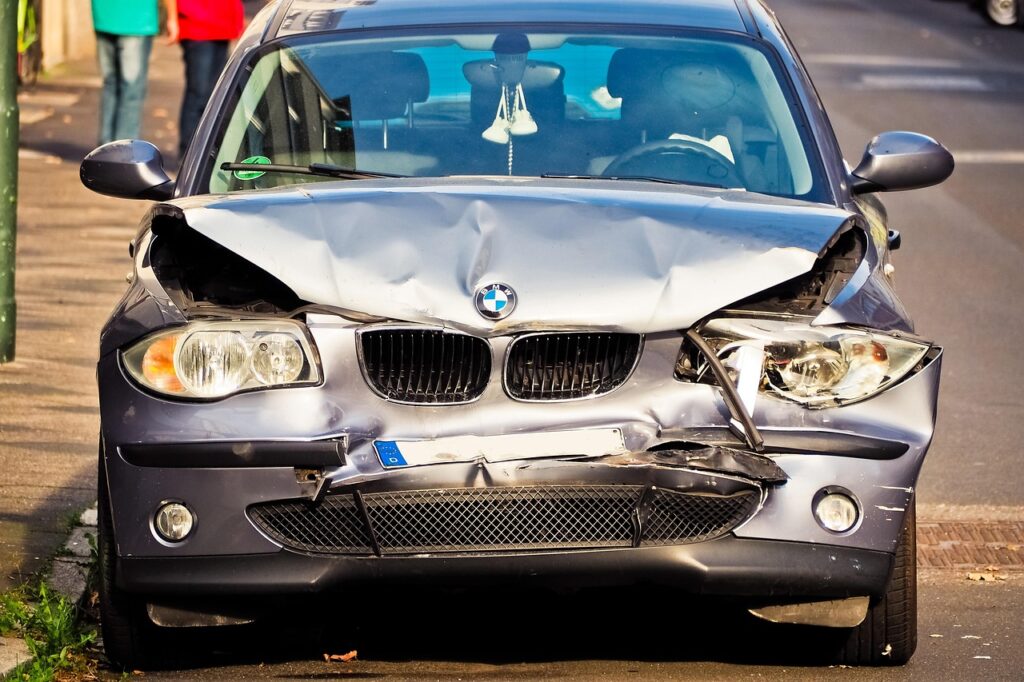
Truck Accident on I-580 or I-880? Why Bay Area Trucking Cases Are More Complex Than Car Crashes
A truck accident claim is not just a bigger car accident claim. If a big rig hit you on I-880 through West Oakland, on I-580 in…
Read More
Reviewed by Megan T. Burns, Mirador Law
If you were driving without insurance when another driver hit you in California, you can still sue and you can still recover money, but not all of it. Proposition 213, codified at California Civil Code section 3333.4, bars an uninsured owner or operator of a vehicle from recovering non-economic damages, meaning pain and suffering, emotional distress, physical impairment, disfigurement, and inconvenience. It does not touch your economic damages: medical bills, lost wages, future care costs, and property damage remain fully recoverable. Prop 213 also does not apply to pedestrians, cyclists, or passengers who do not own the uninsured vehicle, and it carves out drivers hit by someone convicted of driving under the influence in connection with the crash. Those distinctions decide whether a case is worth a few thousand dollars or a few hundred thousand.
At Mirador Law we have been handling car accident, truck accident, and motorcycle collision cases across Pleasanton, Dublin, Livermore, and the wider Tri-Valley for over five decades, including the Prop 213 fact patterns that most insurance adjusters try to use to shut a case down before it starts. Our Pleasanton personal injury lawyers recently secured two of California’s Top 50 plaintiff verdicts for 2024. This guide explains exactly what Prop 213 does, exactly what it does not do, the statutory and case-law exceptions that keep non-economic damages on the table, and what to do next if you have been injured in an accident while uninsured. If you want to skip ahead and talk to a lawyer, call Mirador Law at (925) 460-8484. Consultations are free and confidential.
Proposition 213, the Personal Responsibility Act of 1996, was a California ballot initiative approved by voters on November 5, 1996 with 76.83 percent of the vote. It amended California law to add Civil Code sections 3333.3 and 3333.4. Section 3333.3 blocks recovery by any person injured while committing or fleeing from a felony. Section 3333.4 is the provision that comes up in nearly every uninsured driver accident case in California, and it does two things: it strips non-economic damages from uninsured drivers and vehicle owners who are injured in a crash, and it strips those same damages from any driver convicted of DUI in connection with the crash. The statute applies to any action in which the initial trial had not commenced before January 1, 1997, which means it now governs every California motor vehicle accident case being filed today.
The stated purpose of Prop 213 was to protect law-abiding, insured Californians from paying pain-and-suffering awards to uninsured drivers who had contributed nothing to the insurance pool. The California Supreme Court has since described that purpose in several opinions and used it to shape how far the statute reaches. As we set out below, courts have declined to extend Prop 213 into contexts the voters were not clearly asked to reach, which is why some of the most valuable exceptions come from case law rather than from the statute itself.
Section 3333.4 has three subdivisions. Subdivision (a) sets out the bar: in any action arising out of the operation or use of a motor vehicle, a person shall not recover non-economic losses if any of three conditions applies. The injured person was operating the vehicle in violation of Vehicle Code section 23152 or 23153 (California’s DUI statutes) and was convicted of that offense. Or the injured person was the owner of a vehicle involved in the accident for which the owner cannot establish financial responsibility. Or the injured person was the operator of a vehicle involved in the accident and cannot establish financial responsibility.
Subdivision (b) closes off the insurance workaround: no insurer shall be liable, directly or indirectly, under any liability policy or uninsured motorist policy, to indemnify for non-economic losses of any person covered by subdivision (a).
Subdivision (c) provides the DUI exception on the other side: where an uninsured vehicle owner is injured by a motorist who was operating a vehicle in violation of Vehicle Code section 23152 or 23153 at the time of the accident and was convicted of that offense, the uninsured owner is not barred from recovering non-economic losses. In plain English: if the driver who hit you is convicted of DUI in connection with the crash, your uninsured status stops mattering and your pain and suffering is back on the table.
| Situation | Non-economic damages recoverable? | Statutory basis |
|---|---|---|
| Insured driver hit by insured driver | Yes | Not affected by Prop 213 |
| Uninsured driver hit by insured driver | No | Civ. Code § 3333.4(a)(2) |
| Uninsured owner-driver convicted of DUI at time of crash | No | Civ. Code § 3333.4(a)(1) |
| Uninsured driver hit by driver who is convicted of DUI | Yes | Civ. Code § 3333.4(c) |
| Passenger in uninsured vehicle, not the owner | Yes | Falls outside § 3333.4(a) |
| Pedestrian or cyclist hit by uninsured driver | Yes | Falls outside § 3333.4(a) |
Insurance adjusters often invoke Prop 213 in situations where it does not actually apply. The statute’s text and the California Supreme Court’s interpretation of it have carved out several categories of injured people who keep their full non-economic damages regardless of the insurance status of any vehicle involved.
Pedestrians and cyclists. Section 3333.4(a) applies only to the operator or owner of a vehicle involved in the accident. A pedestrian struck in a crosswalk, a cyclist hit by a car turning right, and a skateboarder or scooter rider clipped in a bike lane are none of those things. Their non-economic damages are fully recoverable no matter what insurance the person on foot did or did not have on a car parked at home.
Passengers who do not own the vehicle they were riding in. Section 3333.4(a) applies to owners of an uninsured vehicle and to operators who cannot establish financial responsibility. A passenger is neither. If you were a passenger in a friend’s uninsured car and the friend was hit by another driver, your non-economic damages are not barred by Prop 213, because the friend is the owner and operator, not you.
Wrongful death heirs who are not themselves the uninsured owner or operator. In Horwich v. Superior Court (Acuna) (1999) 21 Cal.4th 272, the California Supreme Court held that Prop 213 does not bar a wrongful death plaintiff whose decedent was an uninsured motorist from recovering damages for loss of care, comfort, and society. The court’s reasoning was that a surviving spouse or child suing for wrongful death did not contribute to the perceived unfairness the voters targeted and is not in a position to rectify it. The court expressly reserved the question of whether an heir who is themselves the uninsured owner or operator of the vehicle involved comes within the statute.
Injured people bringing product liability claims against the vehicle manufacturer. In Hodges v. Superior Court (Ford Motor Co.) (1999) 21 Cal.4th 109, decided 6-1 with Justice Mosk writing for the majority, the California Supreme Court held that Prop 213 does not apply to product liability actions brought by an uninsured motorist against an automobile manufacturer. The plaintiff was driving a borrowed 1967 Ford Mustang that was not insured. After the car stalled on the freeway, it was rear-ended, the gas tank ruptured, and he suffered second- and third-degree burns over 26 percent of his body. The court reasoned that Prop 213’s purpose was to protect law-abiding insured motorists, not to give a windfall to manufacturers of defective vehicles. If a defect in the car, a defective tire, or a defective safety component contributed to your injuries, that claim survives Prop 213 in full.
People injured in accidents that did not involve a motor vehicle at all. Section 3333.4 applies only to actions arising out of the operation or use of a motor vehicle. If your injury arose from a slip and fall inside a shopping center, a dog bite in a residential neighborhood, an assault, or a defective consumer product, Prop 213 has nothing to do with it, regardless of your auto insurance status.
Even inside a motor vehicle accident case, there are several fact patterns where an uninsured driver keeps the right to recover non-economic damages. Some come directly from the statute; others come from how appellate courts have read it.
The at-fault driver is convicted of DUI. This is the statute’s own express carve-out. Under Civil Code section 3333.4(c), if the driver who caused the crash was operating a vehicle in violation of Vehicle Code section 23152 or 23153 at the time and was convicted of that offense, the uninsured owner is not barred from recovering non-economic losses. The conviction is the trigger, not the arrest. If the DUI case is still pending, or if the prosecutor pleads it down to a non-DUI offense such as reckless driving under Vehicle Code section 23103, the exception is at risk. Track the criminal case carefully.
You were driving an employer’s uninsured vehicle in the course of your employment. Section 3333.4 targets the owner of an uninsured vehicle and an operator who cannot establish financial responsibility. When an employee is driving a company vehicle in the course of employment, the responsibility for insurance sits with the employer, not the employee. Practitioners consistently treat this fact pattern as outside Prop 213’s scope, so an employee injured by a third party while driving an uninsured employer vehicle can still recover non-economic damages. This point comes up regularly with delivery drivers, in-home service workers, and small business staff whose employer let a commercial policy lapse.
You were driving a borrowed vehicle and you personally carry insurance on a different car. The statute penalizes operators who cannot establish financial responsibility. Where the driver has their own California-compliant auto policy on a personal vehicle, that policy establishes financial responsibility even when the driver is behind the wheel of a friend’s or family member’s uninsured car at the moment of the crash. The specific facts matter (whose policy, what coverage territory, whose permission), but this is a live and commonly overlooked exception.
The accident happened entirely on private property. Section 3333.4 refers to actions arising out of the operation or use of a motor vehicle, and the statutory scheme sits alongside California’s Financial Responsibility Law under Vehicle Code section 16000 and following, which itself excepts many private-property collisions. Where a crash occurred entirely inside a private parking lot or on a private driveway with no public road interaction, courts and adjusters have treated the Prop 213 bar as inapplicable in some fact patterns. This is fact-specific and worth flagging to counsel early.
You are suing the vehicle manufacturer for a product defect. See Hodges, above. A product liability claim is not an action arising out of the operation or use of a motor vehicle in the sense Prop 213 was aimed at, and non-economic damages remain available.
You were an emergency responder or performing emergency duties. California law separately governs the conduct of emergency responders. Where you were on duty as a peace officer, firefighter, or paramedic driving a public agency vehicle, the private-owner insurance framework Prop 213 penalizes simply does not apply.
Prop 213 only touches non-economic damages. Everything else survives. Understanding what falls into which category is the difference between an uninsured driver walking away thinking they have no case and an uninsured driver recovering enough to cover their medical care and time off work.
| Category | Definition | Barred by Prop 213 for uninsured owner-drivers? |
|---|---|---|
| Past medical expenses | Emergency room, hospital, imaging, surgery, medication | No, fully recoverable |
| Future medical expenses | Ongoing physical therapy, future surgery, long-term care | No, fully recoverable |
| Past lost wages | Income lost from missed work during recovery | No, fully recoverable |
| Future lost earning capacity | Reduction in ability to earn caused by permanent injury | No, fully recoverable |
| Property damage | Repair or replacement of the vehicle and personal property | No, fully recoverable |
| Out-of-pocket costs | Prescriptions, mobility aids, home modifications, travel to appointments | No, fully recoverable |
| Pain and suffering | Physical pain and mental distress from the injury | Yes, barred |
| Emotional distress | Anxiety, depression, PTSD flowing from the accident | Yes, barred |
| Loss of consortium | Loss of intimacy, companionship, household services for a spouse | Yes, barred for the uninsured driver’s own recovery |
| Disfigurement | Compensation for visible scarring or permanent physical change | Yes, barred |
The practical consequence is that a serious injury case for an uninsured driver can still be substantial. A hospitalization, a surgery, three months out of work, and a course of physical therapy can add up to tens or hundreds of thousands of dollars in economic damages, none of which Prop 213 touches. In catastrophic injury cases involving traumatic brain injury or spinal cord damage, the economic component alone frequently runs into seven figures. The mistake is assuming there is no case at all. The right mistake to avoid is the opposite: accepting an early low offer from an insurance adjuster who quietly built the loss of pain and suffering into their number and hoped you would not notice.
The statute penalizes owners who cannot establish financial responsibility and operators in the same position. In California that means one of the following at the moment of the accident: a liability insurance policy meeting the state minimums (currently $15,000 per person and $30,000 per accident for bodily injury, plus $5,000 for property damage), a deposit of $35,000 with the DMV, a self-insurance certificate from the DMV, or a surety bond in the amount of $35,000. The insurance route is the only one nearly all private motorists use.
The trap is timing. Financial responsibility is measured as of the moment of the crash, not as of the day you file suit. Courts and insurers treat any lapse in coverage on the day of the accident as making the driver uninsured for Prop 213 purposes, even a lapse of a single day caused by a missed payment or an administrative error at the insurer. If your policy was canceled two days before your accident and you got a payment confirmation the next morning, you are likely uninsured for Prop 213 purposes. Obtain proof of coverage on the accident date from your insurer as your first step, and if a lapse existed, do not concede it to an adjuster before you have spoken to counsel. There are fact patterns where a lapse can be cured or disputed.
An SR-22 is a certificate an insurer files with the DMV proving that a high-risk driver is carrying at least the state minimum coverage. Being subject to an SR-22 requirement does not make you uninsured. Failing to actually keep the policy in force behind the SR-22 does. If the SR-22 has been in place and premiums were current, you satisfy the financial responsibility test.
Prop 213 has generated substantial case law in the three decades since its passage. Four decisions frame most modern arguments.
Yoshioka v. Superior Court (1997) 58 Cal.App.4th 972 was one of the earliest constitutional challenges to Prop 213. The plaintiff argued that stripping non-economic damages from uninsured drivers violated due process and equal protection under both the U.S. and California Constitutions. The Second District Court of Appeal rejected each challenge and upheld the statute in full. Yoshioka remains the leading case establishing that Prop 213 is constitutionally sound and cannot be defeated by broad constitutional attack.
Hodges v. Superior Court (Ford Motor Co.) (1999) 21 Cal.4th 109 is the California Supreme Court’s product liability carve-out, discussed above. The court held that Prop 213’s language limits its application to actions in the insurance context and does not extend to product liability claims against a vehicle manufacturer. Justice Mosk wrote for a 6-1 majority. Hodges is the reason why an uninsured driver whose injuries were caused or aggravated by a defective airbag, seatbelt, tire, or fuel system can still recover full non-economic damages against the manufacturer.
Horwich v. Superior Court (Acuna) (1999) 21 Cal.4th 272 is the California Supreme Court’s wrongful death decision, also discussed above. Heirs who are not themselves the uninsured owner or operator can recover their own non-economic damages for loss of care, comfort, and society even though the decedent was uninsured. The court expressly did not decide the different question of an heir who was themselves the uninsured owner or operator of the vehicle.
Chude v. Jack in the Box Inc. (2010) 185 Cal.App.4th 37 shows the outer edge of Prop 213 in the drive-through context. The plaintiff bought coffee from a drive-through window, brought the cup into her uninsured car, and suffered second-degree burns when it spilled. The Court of Appeal held that section 3333.4 barred her non-economic damages because the injury still arose from the operation or use of her uninsured motor vehicle. Chude is a cautionary reminder that “arising out of the operation or use of a motor vehicle” is read broadly by California courts and that the presence of a third-party defendant such as a restaurant does not automatically defeat Prop 213.
Prop 213 is state law, so the same rules apply from Pleasanton to Oakland, Fremont to Hayward, Newark to San Leandro. What changes city to city is the venue where the case is filed, the local traffic patterns that drive most crashes, and the specific insurance adjusters and defense firms who handle claims in each area. Most East Bay car accident claims are filed in the Superior Court of California, County of Alameda, heard through the county’s civil division at the René C. Davidson Courthouse in Oakland and the Gale-Schenone Hall of Justice serving East County. Knowing how each venue moves, and which adjusters handle each city, changes how a Prop 213 argument is framed and settled.
Our Pleasanton personal injury lawyer team has been handling Tri-Valley crashes since 1973 from our Willow Road headquarters. Common local injury settings where Prop 213 becomes central include the I-680 and I-580 corridors, the Stoneridge Drive and Bernal Avenue arterials, downtown Main Street in Pleasanton, and the parking structures and walkways around Hacienda Business Park and the Stoneridge shopping district. Serious injuries are often treated at Stanford Health Care Tri-Valley in Pleasanton before more specialized care. If you were uninsured when you were hit and you live in Pleasanton, Dublin, or Livermore, our car accident lawyers will walk through the Prop 213 analysis with you before you talk to any adjuster. A Pleasanton personal injury attorney who tries these cases sees the exceptions insurance carriers routinely ignore.
The typical Prop 213 mistake we see from Pleasanton drivers is accepting a first settlement offer that quietly zeros out pain and suffering as if the whole case were worth nothing. It is not. As your Pleasanton personal injury lawyer will confirm, medical bills and lost wages alone often justify pushing back. If you are searching for a personal injury lawyer Pleasanton CA residents actually trust with a serious uninsured driver claim, look for one who has tried Prop 213 exceptions in front of an Alameda jury rather than one who settles every case at the first offer. As a personal injury attorney Pleasanton CA families have relied on for five decades, we treat every offer as a starting point, not an ending point.
Fremont crashes concentrate on the I-880 corridor, along Mission Boulevard, and at the Warm Springs and Mowry intersections. Newark crashes cluster around the Dumbarton Bridge approaches and along Cedar Boulevard and Thornton Avenue. Both cities send serious trauma patients to Washington Hospital and Kaiser Permanente Fremont, and the economic damages alone from those hospitalizations frequently support a case even when Prop 213 has stripped pain and suffering off the top.
Our Fremont personal injury lawyer team handles Prop 213 fact patterns the same way it handles every other complex issue: verify insurance status on the accident date, chase the criminal case if there was a DUI arrest, check for product liability angles in serious crashes, and preserve every category of economic damage in the demand. If you were hit while uninsured and you need a Fremont personal injury lawyer who understands both the statute and the appellate cases that narrow it, call us. As your Fremont personal injury lawyer, we treat every Prop 213 argument as something to test against the exceptions, not as a settled bar on your case.
In Newark, the analysis is the same. If you were hit by an uninsured driver, or you were the uninsured driver, our Newark CA injury lawyer team will run the same Prop 213 checklist. A car accident lawyer Newark CA residents can call directly is important because Newark’s Alameda County venue overlaps with Fremont, and how a case is presented at the René C. Davidson Courthouse matters. If you need a Newark CA injury lawyer for a Prop 213 case specifically, ask up front how many uninsured motorist cases the firm has actually tried. Most Prop 213 arguments settle, but the ones that go to trial are the ones that force real numbers from carriers.
Oakland Prop 213 cases run through the René C. Davidson Courthouse directly and often involve crashes on I-580, I-880, I-980, and the surface arterials of downtown, Fruitvale, and East Oakland. Our Oakland personal injury lawyer team files here regularly, and we know which adjusters at which carriers reach for Prop 213 first when they see an uninsured claimant. Whether the collision was a rear-ender on Broadway or a T-bone at International Boulevard, the Prop 213 analysis is the same, and so is the mistake most uninsured drivers make: assuming the case is worth nothing.
A good Oakland personal injury lawyer treats the Prop 213 conversation as a starting question, not an ending answer. Was the other driver arrested for DUI? Was there a defect in the vehicle that magnified the injury? Was the plaintiff a passenger rather than an owner-operator? Any of these can shift a Prop 213 case from an economic-only recovery to a full-damages recovery. If you were involved in a serious Oakland car accident and any part of your insurance status is in doubt, contact an Oakland personal injury lawyer before you speak to an adjuster. An experienced Oakland personal injury lawyer will identify Prop 213 exceptions the carrier’s claims file will not.
Hayward pedestrian and cyclist injuries concentrate along Mission Boulevard, Foothill Boulevard, and near the BART station and Southland Mall corridors. Because Prop 213 does not apply to pedestrians or cyclists at all, a Hayward pedestrian accident lawyer will often move the case forward on full non-economic damages regardless of whether the injured pedestrian owned an insured car at home. This is one of the most common misapplications of Prop 213 in the East Bay: adjusters try to invoke it against a Hayward pedestrian accident lawyer’s client because the pedestrian happened to own an uninsured vehicle that was parked at home during the crash. The statute simply does not reach that fact pattern, and a Hayward pedestrian accident lawyer who knows the case law will not entertain the argument.
The same logic applies to Hayward cyclists hit in a bike lane, to skateboarders, to scooter riders, and to anyone on foot. If you were struck as a pedestrian anywhere in Hayward, contact a Hayward pedestrian accident lawyer immediately and do not concede any Prop 213 point to the adjuster. Even where the injuries are severe and the pedestrian had no auto coverage, a Hayward pedestrian accident lawyer will preserve the full non-economic damages claim under the plain terms of section 3333.4.
San Leandro drivers face the same Prop 213 framework as the rest of Alameda County. Crashes along the I-580, I-880, MacArthur Boulevard, and near the Bayfair Center send injured residents to San Leandro Hospital and Alameda Health System. If you need a personal injury lawyer San Leandro residents trust for a Prop 213 case, the analysis begins with insurance verification and moves quickly through the statutory exceptions. A personal injury lawyer San Leandro families call after a serious crash will typically look first at whether the at-fault driver was DUI-arrested, since that single fact can flip the case from economic-only to full-damages recovery. Whether you need a personal injury lawyer San Leandro area residents recommend or an accident attorney in San Leandro who handles Prop 213 specifically, the first move is the same: verify coverage, track the criminal case, and never settle before you know which exceptions apply.
In California, the general deadline to file a personal injury lawsuit arising from a car accident is two years from the date of the injury under Code of Civil Procedure section 335.1. If a public entity is at fault, for example a dangerous roadway design, a defective traffic signal, or a government vehicle, you generally have only six months to file an administrative claim under Government Code section 911.2. California also follows a pure comparative negligence rule, so even if you were partly at fault, your recovery is reduced by your share rather than barred outright. Prop 213 sits on top of these deadlines and rules; it changes what you can recover, not how long you have to file. Miss the two-year statute of limitations and no exception will save the case.
The following hypothetical examples illustrate how these cases can unfold. They are not based on any specific client and are provided for educational purposes only.
Scenario one: uninsured driver rear-ended on I-580 through Pleasanton. A commuter merging from I-680 onto westbound I-580 is rear-ended by a driver who was looking at a phone. The commuter’s auto policy had lapsed three days earlier because a credit card on file expired. The insurance adjuster invokes Prop 213 in the first phone call and offers to close the file for a nuisance payment. In reality, the commuter’s medical bills for a cervical MRI, a neurology consultation, and six weeks of physical therapy total about $18,000, plus three weeks of lost wages. Prop 213 does not touch a dollar of that. Under California’s comparative negligence system, shared fault reduces recovery but does not bar it, and here the rear-ending driver bears the fault. The economic damages case is fully live and worth pursuing in full.
Scenario two: passenger in an uninsured friend’s car struck at Stoneridge Drive intersection. A passenger in a friend’s uninsured vehicle is T-boned when another driver runs a red light. The at-fault driver is arrested and later convicted of DUI under Vehicle Code section 23152. Two Prop 213 exceptions apply at once. First, the passenger was not the owner or operator of the uninsured vehicle, so section 3333.4(a) does not touch the passenger’s claim at all. Second, even the injured friend who owned the uninsured car recovers non-economic damages under section 3333.4(c) once the DUI conviction lands, because that exception restores pain and suffering for uninsured owners hit by drivers convicted under Vehicle Code sections 23152 or 23153.
Scenario three: uninsured driver injured by a defective airbag. An uninsured driver is hit by another driver on Bernal Avenue in Pleasanton. The impact is moderate, but the vehicle’s airbag deploys with unusual force and causes chemical burns to the face and neck. Under Hodges v. Superior Court (Ford Motor Co.) (1999) 21 Cal.4th 109, a product liability claim against the vehicle manufacturer for a defective airbag is not barred by Prop 213 even though the plaintiff was an uninsured driver. The plaintiff can recover non-economic damages against the manufacturer in full, alongside all economic damages against both the at-fault driver and the manufacturer.
An experienced Pleasanton personal injury lawyer changes the trajectory of a Prop 213 case in five concrete ways. The first is coverage verification: pulling the declarations page, payment history, and any cancellation or reinstatement correspondence from the insurer to establish whether a coverage lapse can be disputed or cured. The second is tracking the criminal case against the at-fault driver: a Vehicle Code section 23152 or 23153 conviction restores non-economic damages under Civil Code section 3333.4(c), so a Pleasanton personal injury attorney will hold the civil timeline until the criminal case resolves rather than settling early. The third is identifying exceptions the adjuster has quietly omitted: passenger status, pedestrian or cyclist status, wrongful-death heir status under Horwich, product liability angles under Hodges, and employer-vehicle context. The fourth is preserving the full economic damages record: past and future medical care, lost wages, lost earning capacity, and out-of-pocket costs the carrier will try to discount. The fifth is filing before the two-year deadline under Code of Civil Procedure section 335.1, or the six-month deadline under Government Code section 911.2 if a public entity is involved.
Our team at Mirador Law advocates for injured people across Pleasanton, Dublin, Livermore, Fremont, Newark, Oakland, and San Leandro under California’s comparative negligence system, and we pursue the compensation our clients are entitled to under California law rather than accepting the first offer an adjuster puts on the table. The courtroom is not just about laws, it is about lives, and Prop 213 is one of the areas where a firm that actually tries these cases makes the largest single difference in what an injured person recovers.
Five patterns show up over and over in the Prop 213 cases we see across the Tri-Valley. Each one reduces recovery. Each one is avoidable.
Yes. Prop 213 restricts what you can recover; it does not bar the lawsuit itself. Under Civil Code section 3333.4(a)(2) an uninsured owner-driver of a vehicle involved in the accident cannot recover non-economic damages such as pain and suffering, but medical bills, lost wages, future medical care, lost earning capacity, and property damage remain fully recoverable. If the other driver is convicted of DUI in connection with the crash, or if the injury involves a defective vehicle component, non-economic damages may also be recoverable under Civil Code section 3333.4(c) and Hodges v. Superior Court respectively.
No. Section 3333.4(a) applies only to the owner of an uninsured vehicle and to the operator of a vehicle who cannot establish financial responsibility. A passenger is neither. As long as you were not the owner of the uninsured vehicle you were riding in and were not driving it, your pain and suffering and other non-economic damages are recoverable from any at-fault driver. This is one of the most commonly misapplied provisions of Prop 213 by insurance adjusters.
No. Prop 213 applies only to the owner or operator of a motor vehicle involved in the accident. A pedestrian struck in a crosswalk, a cyclist hit by a car, and a scooter or skateboard rider clipped in a bike lane are outside the statute’s reach entirely. Non-economic damages are fully recoverable regardless of what auto insurance the injured person carries on any vehicle they own.
Civil Code section 3333.4(c) restores non-economic damages to an otherwise-uninsured owner where the other driver was operating in violation of Vehicle Code section 23152 or 23153 (California DUI) at the time of the accident and was convicted of that offense. The conviction is the trigger, not the arrest. If the DUI case is pending, hold the civil settlement talks. If the prosecutor pleads the charge down to a non-DUI offense such as reckless driving under section 23103, the exception may fail. Coordinating the criminal and civil timelines is critical.
Not to the heirs’ own claims. In Horwich v. Superior Court (Acuna) (1999) 21 Cal.4th 272, the California Supreme Court held that a wrongful death plaintiff who is not themselves the uninsured owner or operator of the vehicle can recover damages for loss of care, comfort, and society even though the decedent was uninsured. The court expressly reserved the different question of an heir who was also the uninsured owner or operator, so if you are both heir and driver, take advice on the specific facts.
No. In Hodges v. Superior Court (Ford Motor Co.) (1999) 21 Cal.4th 109, decided 6-1 by the California Supreme Court with Justice Mosk writing the majority, the court held that Prop 213 does not apply to product liability actions brought by an uninsured motorist against an automobile manufacturer. If a defective airbag, seatbelt, tire, fuel system, or other vehicle component caused or aggravated your injuries, the product liability claim against the manufacturer carries full non-economic damages regardless of your insurance status.
Almost certainly yes for Prop 213 purposes. California courts and insurers measure financial responsibility as of the moment of the accident, and any lapse in coverage on the accident date, even a lapse of one day caused by a missed payment or a processing error, is treated as making the owner or operator uninsured for section 3333.4 purposes. Obtain the declarations page, payment history, and any cancellation or reinstatement correspondence from your insurer immediately. In some fact patterns a disputed lapse can be cured or the insurer’s cancellation can itself be challenged. Do not concede the lapse to an adjuster before you have consulted a lawyer.
Two years from the date of the injury under Code of Civil Procedure section 335.1 for the general personal injury statute of limitations. Six months to file an administrative claim under Government Code section 911.2 if a public entity is at fault, for example a dangerous road design, defective traffic signal, or government vehicle. Prop 213 does not change either deadline. It only changes what damages you can recover once the case is filed.
The same way it affects victims anywhere in California, with the same statutory exceptions on the table. A car accident lawyer Pleasanton residents choose for a Prop 213 case will examine four things: whether the at-fault driver was DUI-arrested (Civ. Code § 3333.4(c) restores non-economic damages on conviction), whether the client was a passenger rather than an owner-operator, whether the crash involved a defective vehicle component that opens a Hodges product liability claim, and whether any insurance lapse can be disputed. A Pleasanton personal injury attorney with real trial experience treats Prop 213 as an issue to litigate, not a rule to concede. Our team of car accident lawyers Pleasanton families have relied on since 1973 handles Prop 213 exceptions at the Alameda Superior Court civil division. If you are searching for a personal injury lawyer Pleasanton CA residents actually recommend for uninsured-driver cases, or a personal injury attorney Pleasanton CA insurance carriers respect, call us at (925) 460-8484. Our Pleasanton personal injury lawyer team also serves Dublin, Livermore, and Danville.
Identically to the way it affects victims anywhere in Alameda County. Our Fremont personal injury lawyer team handles Prop 213 fact patterns from I-880 collisions, Mission Boulevard crashes, and Warm Springs intersection wrecks. A Fremont car accident lawyer with Prop 213 experience will identify DUI carve-outs, employer-vehicle exceptions, and product liability angles that carriers routinely omit from their claims files. If you are looking for a Fremont personal injury lawyer for an uninsured driver case, ask how many Prop 213 exception arguments the firm has actually pressed in litigation. In Newark, the pattern is the same. Our Newark CA injury lawyer team runs the identical Prop 213 checklist for crashes near the Dumbarton Bridge and along Cedar Boulevard, and a car accident lawyer Newark CA residents call for these cases will do the same coverage verification, DUI tracking, and exception analysis.
Oakland Prop 213 cases run through the René C. Davidson Courthouse directly, and our Oakland personal injury lawyer team files there regularly on I-580, I-880, and surface arterial cases. Whether the collision was on Broadway, International Boulevard, MacArthur, or one of the freeway interchanges, an Oakland personal injury lawyer treats the Prop 213 issue as the opening of the analysis rather than the end. If you need an Oakland personal injury lawyer for an uninsured driver case, and you want the case handled by a team that also knows Alameda’s local defense firms, our Oakland personal injury lawyer group handles the full range of Prop 213 exceptions from initial demand through trial.
San Leandro follows the same Prop 213 framework as the rest of Alameda County. A personal injury lawyer San Leandro residents rely on for uninsured driver cases will verify coverage on the accident date, track any DUI arrest of the at-fault driver, and press every applicable exception. An accident attorney in San Leandro who tries these cases understands that Prop 213 is a bar on non-economic damages, not on the case itself. In Hayward, the biggest issue is misapplication. Adjusters routinely invoke Prop 213 against a Hayward pedestrian accident lawyer’s client because the pedestrian happened to own an uninsured vehicle parked elsewhere. That is not what the statute says, and a Hayward pedestrian accident lawyer who knows the case law will not entertain it. If you were struck on foot or on a bike anywhere in Hayward, contact a Hayward pedestrian accident lawyer immediately and preserve every non-economic damages claim, because Prop 213 simply does not apply to you.
Do not assume Prop 213 has closed your case. It often has not. Whether you were uninsured, whether you were a passenger, whether you were a pedestrian, whether the other driver was convicted of DUI, and whether a vehicle defect was in play all change the analysis, and adjusters routinely use Prop 213 as a bluff to settle for a fraction of what a case is worth in economic damages alone. Get the facts of your case in front of a lawyer who has actually tried these matters before you sign anything.
Contact Mirador Law for a free, confidential consultation.
Pleasanton HQ: 4750 Willow Road, Ste. 275, Pleasanton, CA 94588 | (925) 460-8484
Oakland office: 1901 Harrison St, Ste 1100, Oakland | (510) 785-8400
Newark office: 39899 Balentine Dr, Ste 200, Newark | (510) 785-8400
Wrongful death lawyers by location: Pleasanton | Oakland | Fremont & Newark
Call us. Every case starts with a conversation.
This article is general information about California personal injury law and Proposition 213 as of 2026 and is not legal advice tailored to your particular situation. Statutory citations are to the California Civil Code, Vehicle Code, Code of Civil Procedure, and Government Code as amended to date. Case citations reflect published decisions of the California Supreme Court and California Courts of Appeal. Coverage rules, statutory minimums, and appellate case law change; for a determination of how Prop 213 applies to your specific accident, consult a California-licensed attorney. Mirador Law, PC | (925) 460-8484 | miradorlaw.com
A truck accident claim is not just a bigger car accident claim. If a big rig hit you on I-880 through West Oakland, on I-580 in…
Read MoreInterstate 880 is a vital artery through Fremont, connecting commuters, commercial traffic, and everyday drivers. Its heavy congestion and frequent lane changes make it a corridor…
Read MoreFrom Crisis to Clarity
Serious injuries demand immediate action. The sooner we evaluate your case, the stronger your position becomes. Schedule a free consultation to understand your options, your timeline, and the path forward to full compensation.
Schedule Confidential Consultation