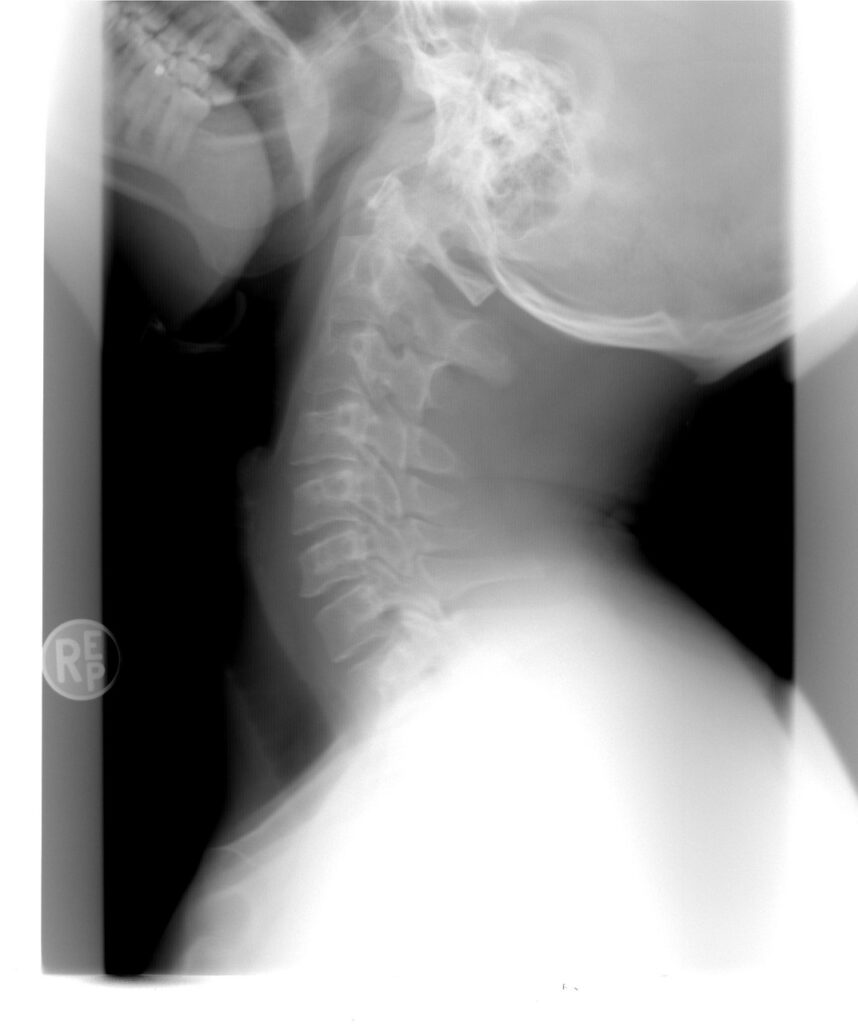
Beyond the ER: Documenting Traumatic Brain Injuries (TBI) for a California Legal Claim
A traumatic brain injury (TBI) does not always appear on an X-ray. Many victims leave the emergency room believing they are “lucky to be alive,” only…
Read More

A catastrophic injury claim is built on a different foundation than a routine injury case. If you or someone in your family suffered a spinal cord injury, a traumatic brain injury, or an amputation in a crash on I-880, a fall on someone else’s property in Fremont, or any serious accident across the East Bay, the legal question is rarely just who was at fault. It is what the rest of your life will cost, and who proves it.
Here is the short answer, then the details. In a catastrophic case the liability side is often ordinary negligence, while the damages side is a specialized medical and economic exercise that decides almost everything. Spinal cord injuries and traumatic brain injuries are both catastrophic, but they are valued differently because they impose different lifetime costs and are proven with different evidence. And in California, an ordinary injury claim carries no cap on compensatory damages, which is exactly why these cases are worth building carefully rather than settling quickly.
There is no single statute that labels an injury catastrophic in a personal injury lawsuit. The term describes the most serious level of harm short of death: an injury that permanently changes how a person lives, works, and functions. In practice it covers spinal cord injuries and paralysis, traumatic brain injuries, amputations, severe burns, blindness, and other permanent disabilities.
What unites them legally is not the diagnosis but the scale. These injuries typically mean lifetime medical care, a permanent loss of earning ability, and harm that reshapes the rest of a person’s life. That scale is why the damages analysis, not the liability theory, usually drives the case.
Both are catastrophic. They are not valued the same way, because the cost drivers and the proof are different.
A spinal cord injury is classified by level and completeness. Cervical injuries can produce quadriplegia affecting all four limbs; thoracic and lumbar injuries can produce paraplegia affecting the lower body. The injury is usually visible on imaging, and its long-term needs are relatively predictable: attendant or around-the-clock care, a wheelchair and its replacements, home and vehicle modifications, recurring medical equipment, and treatment for secondary complications. Because the future needs are concrete, the valuation tends to turn on the size and duration of a documented care plan.
A traumatic brain injury is often the harder case to prove, even when it is just as devastating. The damage may not appear on a standard CT scan, and symptoms such as memory loss, personality change, cognitive slowing, and mood disturbance can look subjective to an insurer. That is why brain injury claims lean on neuropsychological testing, advanced imaging, and testimony from people who knew the person before and after. The valuation often turns less on equipment and more on lost cognitive function, lost earning capacity, and the non-economic toll of a changed mind. Insurers frequently argue a brain injury is exaggerated, pre-existing, or unrelated, which makes the proof, not the diagnosis, the battleground.
The practical takeaway: a spinal cord case is often won on the care plan, and a brain injury case is often won on causation and credibility. A lawyer who treats them the same way undervalues at least one of them.
California law lets an injured person recover not only what has already been spent, but the cost of care they are reasonably certain to need in the future. Building that number is a documented, expert-driven process, not a guess.
The categories of recovery fall into two groups. Economic damages are the measurable financial losses. Non-economic damages cover the human losses such as pain, suffering, and loss of enjoyment of life. (Punitive damages are a separate category and apply only where the conduct was intentional or reckless, not in an ordinary negligence case.) In an ordinary, non-medical-malpractice injury claim, California places no cap on these compensatory damages.
A catastrophic case is built by a team:
Two California rules shape the math in the injured person’s favor. Future medical care is recoverable at the reasonable cost the person is reasonably certain to need, under California Civil Jury Instruction (CACI) No. 3903A. Lost earning capacity is its own recoverable category under CACI No. 3903D, separate from wages already lost. And under California’s collateral source rule, the jury generally cannot reduce an award because health insurance paid some of the bills, so the defendant does not get credit for coverage the injured person arranged.
Insurers know these cases are expensive, so an early offer often arrives before anyone has measured the lifetime cost. Accepting it can leave the injured person to cover decades of care out of pocket. There are concrete reasons the timing matters.
The full medical picture takes time to emerge. With a brain injury especially, what improves, what becomes permanent, and what future care will cost are not knowable in the first weeks. Settling before the prognosis is clear locks in a number based on incomplete information. A claim also cannot be reopened once it is settled and released, no matter how much the care ends up costing. And a case built and documented as if it will go to trial, with a complete life care plan and credible experts, is what pushes an insurer to value it fairly in the first place. Preparing for trial is often what produces a fair settlement without one.
The following hypothetical examples illustrate how these cases can unfold. They are not based on any specific client and are provided for educational purposes only.
Consider a Tri-Valley commuter who suffers an incomplete spinal cord injury when another driver runs a light on a surface street feeding I-680. The liability is straightforward. The case turns on a life care plan covering attendant care, equipment replacement over decades, and home modifications, with an economist projecting and discounting those costs to present value.
Or consider a pedestrian struck near a busy Oakland intersection who walks away from the scene and is later diagnosed with a traumatic brain injury after weeks of headaches and memory problems. Here the early CT scan looked normal, so the case turns on neuropsychological testing and on coworkers and family describing the change. The insurer’s first offer, made before any of that evidence existed, badly understated the claim.
In both, the early number and the proven number are far apart, and the difference is the documentation.
California sets firm time limits, and a catastrophic case can involve two very different ones.
For most injury claims, the statute of limitations is two years from the date of the injury, under California Code of Civil Procedure section 335.1. Miss it, and an otherwise strong claim is generally barred.
A separate and much shorter deadline applies when a government or public entity is involved, for example a public transit vehicle, a city- or agency-owned vehicle, or a dangerous condition on a public road or property. In those situations you must file a formal government tort claim within six months of the injury, under California Government Code section 911.2, before you can bring a lawsuit. This six-month rule is the one most often missed, and it is worth checking early in any catastrophic case.
You can still recover. California follows a pure comparative negligence rule, so shared fault reduces your compensation but does not bar it. If you are found 20 percent responsible, your recovery is reduced by 20 percent rather than eliminated. In a catastrophic case, where the lifetime numbers are large, insurers have a strong incentive to push more blame onto the injured person, which is one more reason the underlying evidence matters.
A catastrophic case is, in practice, a project: assembling the right treating physicians, life care planner, vocational expert, and economist; documenting a lifetime of need to a standard that survives cross-examination; and refusing to let an insurer set the value before the evidence is in. The work is less about arguing who caused the crash and more about proving, in detail, what the injury will cost for the rest of a person’s life.
Mirador Law’s roots are in the courtroom. The firm’s lead partners are former trial attorneys recognized among California’s Top 50 plaintiff jury verdicts for 2024 and by Super Lawyers, with close to a hundred jury trials between them. We listen first and fight second, and we build catastrophic cases for the East Bay communities we serve, from Pleasanton and the Tri-Valley to Fremont, Newark, and Oakland, and the Alameda County courts where these cases are heard.
If you or someone in your family has suffered a catastrophic injury anywhere in the East Bay, you do not have to face the insurance companies alone, and you should not let them set the value of your future. California’s deadlines are strict, and when a public entity is involved they run much sooner. Call our Pleasanton office at (925) 460-8484, or our Oakland and Newark offices at (510) 785-8400, for a confidential consultation.
A permanent, life-altering injury short of death, typically a spinal cord injury, traumatic brain injury, amputation, severe burn, or blindness; there is no single statutory definition in a personal injury suit.
The damage is often invisible on standard scans, so proving it relies on neuropsychological testing, advanced imaging, and people who knew the person before and after.
Spinal cord valuations turn on a concrete, equipment-heavy care plan, while brain injury valuations turn more on lost cognitive function, lost earning capacity, and causation.
A life care planner, vocational expert, and economist project the lifetime cost and reduce it to present value; California allows recovery of future care the person is reasonably certain to need, under CACI No. 3903A.
Usually not without legal advice, because early offers often come before the lifetime cost is measured and a claim cannot be reopened once settled.
Two years from the injury under Code of Civil Procedure section 335.1, but only six months if a government or public entity is involved, under Government Code section 911.2.
A traumatic brain injury (TBI) does not always appear on an X-ray. Many victims leave the emergency room believing they are “lucky to be alive,” only…
Read MoreA single moment on I-880 or a busy intersection in Oakland can divide life into before and after. When a crash leads to a catastrophic injury…
Read MoreFrom Crisis to Clarity
Serious injuries demand immediate action. The sooner we evaluate your case, the stronger your position becomes. Schedule a free consultation to understand your options, your timeline, and the path forward to full compensation.
Schedule Confidential Consultation