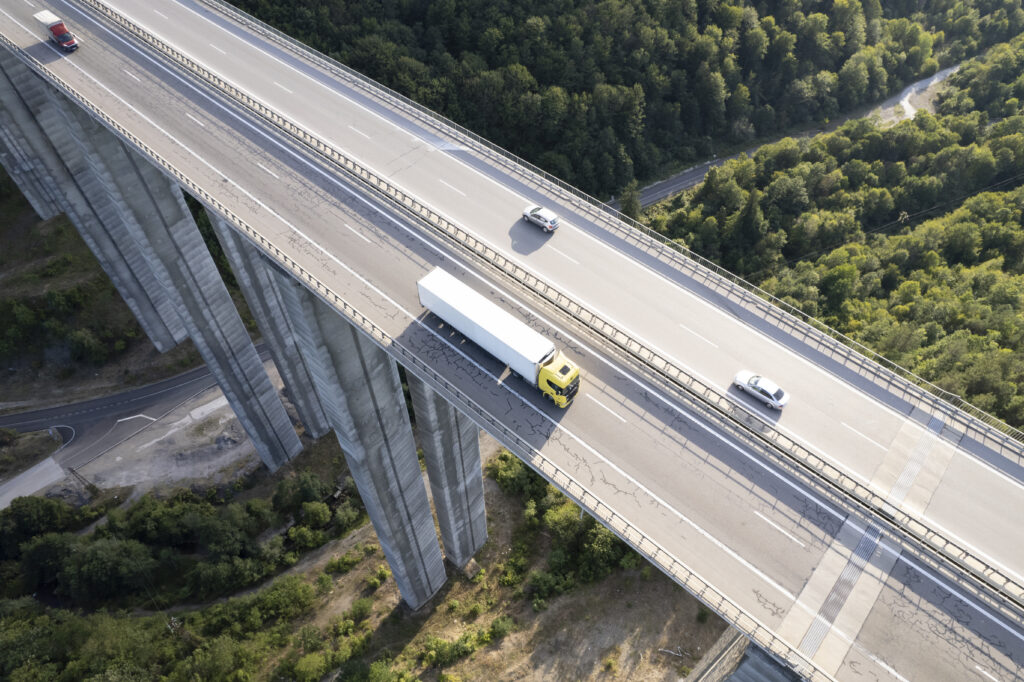
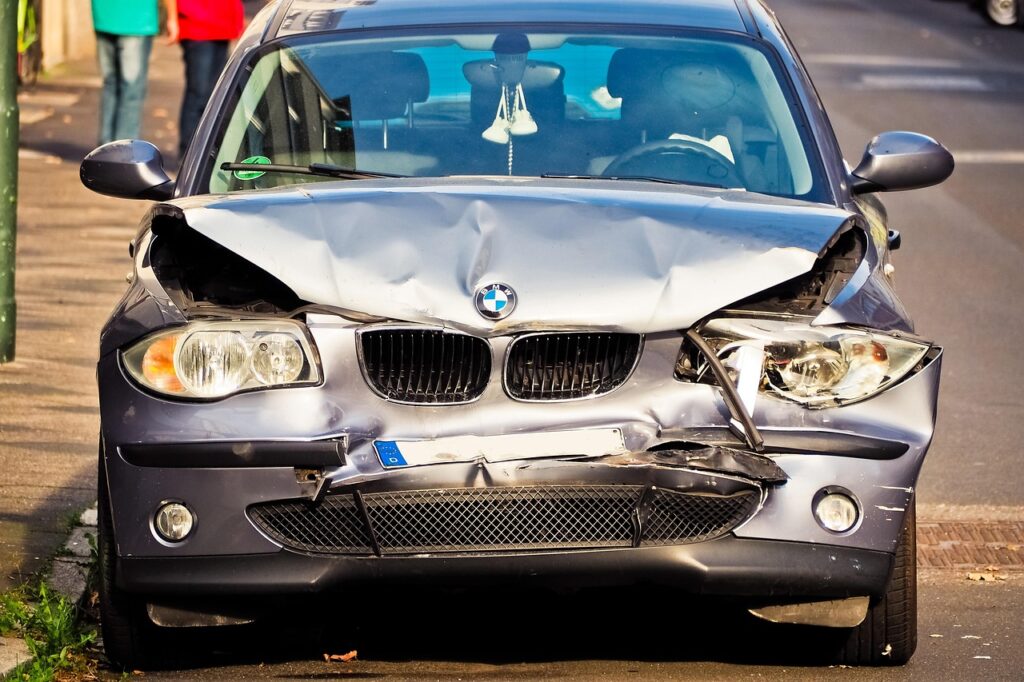
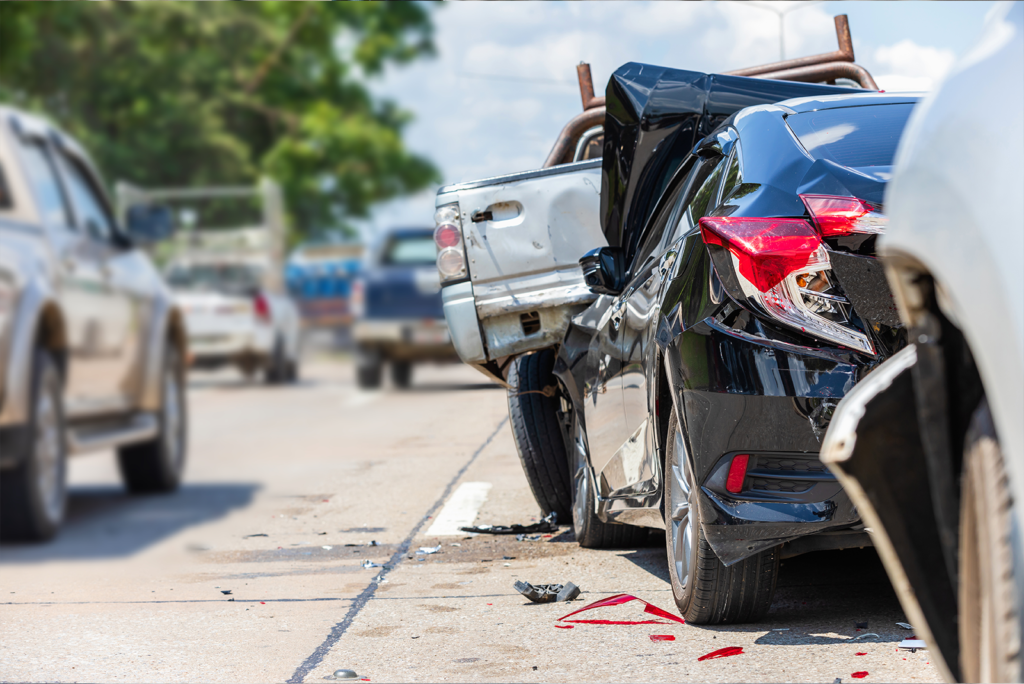
A truck accident claim is not just a bigger car accident claim. If a big rig hit you on I-880 through West Oakland, on I-580 in East Oakland, or near the Port of Oakland freight routes, you are likely facing several companies, their insurers, and their legal teams, not a single at-fault driver. That difference changes who you can hold responsible, what evidence decides the case, and how fast you have to move.
Here is the short answer, then the details. A commercial truck crash usually involves more than one liable party, it is governed by federal safety rules that ordinary car crashes are not, and the evidence that proves it can be erased within days. Those three facts are why these cases call for a different approach from the first week.
Why a truck case is different from a car case
A fully loaded semi can legally weigh up to 80,000 pounds. A typical passenger car weighs around 3,500. That gap is why truck collisions on Oakland’s freeways so often cause serious injuries: traumatic brain injury, spinal damage, multiple fractures, and internal injuries that need long-term care. The physics is only the start. The real difference is legal and structural.
In a standard car accident you usually have two drivers and two insurers. In a truck accident, legal responsibility can be shared across the driver, the trucking company, the company that loaded or secured the cargo, the owner of the truck or trailer, a maintenance contractor, a freight broker, and in some cases a parts manufacturer. Each may carry its own policy and its own defense lawyers. Figuring out who is responsible, and which policy pays, is the core of the work.
Who can be held liable, and under what legal theory
Identifying every responsible party is not about casting a wide net. It is about matching the cause of the crash to the party that controlled it, and to the legal rule that reaches them.
The trucking company, through vicarious liability
Under the doctrine of respondeat superior (Latin for “let the master answer”), an employer is responsible for an employee’s negligence committed within the course and scope of their job. When a company driver causes a crash while working, the company is generally liable for that driver’s negligence. In California, a vehicle owner’s responsibility for someone driving in the owner’s business is anchored in California Vehicle Code section 17150. This link usually matters most, because the company carries far larger insurance than the driver.
The independent-contractor defense, and how it is actually decided
Trucking companies often argue the driver was an independent contractor, not an employee, to avoid vicarious liability, sometimes by having drivers operate under separate business names. California courts look past the label. They examine the real working relationship: if the company controls the routes, schedules, and safety procedures, a court can find an employer-employee relationship regardless of what the contract says. Establishing that control is frequently the difference between reaching a small personal policy and a large commercial one.
The company, through its own negligence
Separate from vicarious liability, a trucking company can be sued directly under several named theories: negligent hiring, putting an unqualified or dangerous driver on the road; negligent retention, keeping one after warning signs; negligent supervision; negligent entrustment; and negligent maintenance. These reach the company’s own conduct, not just the driver’s.
Other parties, by their role
The cargo loader or shipper, when improperly secured or overloaded freight causes a rollover or spill, a recurring hazard on routes feeding the Port of Oakland. The truck or trailer owner, if different from the operating company. A maintenance contractor, for neglected brakes or tires. A parts manufacturer, where a defective component failed. A freight broker, where it selected a carrier with a known poor safety record. And in some cases a government entity, generally immune but exposed where it let a dangerous public road condition persist, the situation that triggers the six-month deadline described below.
Getting this right drives your recovery. Commercial trucks carry much higher policy limits than passenger cars, but reaching those limits depends on proving which party’s conduct caused the harm, under which theory. A claim built only against the driver can leave the largest coverage untouched.
The federal rulebook: FMCSA regulations
Commercial trucking is governed by the Federal Motor Carrier Safety Administration (FMCSA), a layer of federal regulation that does not apply to an ordinary fender-bender. These rules often decide the case.
The most important for injury claims are the hours-of-service rules, which limit how long a commercial driver can operate. A property-carrying driver may drive up to 11 hours, but only after 10 consecutive hours off duty, and only within a 14-hour on-duty window, under 49 C.F.R. section 395.3. When a driver exceeds those limits and causes a crash, the violation can help establish negligence. Other FMCSA rules carry their own weight: driver qualification files (49 C.F.R. Part 391), where gaps are often used to prove negligent hiring, and drug and alcohol testing (49 C.F.R. Part 382). Each is a potential thread of proof.
Why evidence disappears, and why timing matters
Federal rules require carriers to keep records: electronic logging device (ELD) data, driver logs, inspection and maintenance files, and often onboard event-recorder (“black box”) data. That trail is where truck cases are frequently won. The problem is that the trucking company controls most of it. ELD data can be overwritten on a cycle, logs can be lost, and a damaged truck can be repaired or scrapped before anyone independent examines it. A prompt spoliation letter, sent to the right parties, is what preserves this evidence before it is gone.
Insurers move just as fast. An early call from a commercial carrier’s adjuster, or a quick settlement offer, is a claims strategy, not a courtesy. You are not required to give a recorded statement to the trucking company’s insurer, and you do not have to accept an early offer to learn what your claim involves.
A note on how these cases can unfold
The following hypothetical examples illustrate how these cases can unfold. They are not based on any specific client and are provided for educational purposes only.
Consider a driver rear-ended by a delivery truck on I-880 near the Coliseum during the evening commute. The driver’s logs later show the trucker was several hours past the federal hours-of-service limit, on a schedule the company set. Here the claim runs against both the driver and the carrier, by vicarious liability for the driver and directly for a delivery schedule that all but required the violation.
Or consider a motorcyclist hurt when a poorly secured load shifts and spills on the approach to the Port of Oakland. Investigation points not to the driver but to the third-party company that loaded the trailer. The liable party is the loader, and the case turns on cargo-securement records, not driving behavior.
In both, the responsible party is not obvious from the crash scene. It surfaces through the records.
The deadlines you cannot miss
California sets firm time limits, and a truck case can involve two very different ones.
For most truck accident injury claims, the statute of limitations is two years from the date of the injury, under California Code of Civil Procedure section 335.1. Miss it, and the claim is generally barred no matter how strong it was.
A separate and much shorter deadline applies when a government or public entity is involved, for example a city- or agency-owned truck, a public works vehicle, or a dangerous public roadway condition. In those situations you must file a formal government tort claim within six months of the injury, under California Government Code section 911.2, before you can bring a lawsuit. This six-month rule is the one most often missed, because nothing at the scene tells you a public entity was involved. It is worth checking early.
What if you were partly at fault?
You can still recover. California follows a pure comparative negligence rule, so shared fault reduces your compensation but does not bar it. If you are found 20 percent responsible, your recovery is reduced by 20 percent rather than eliminated. Trucking insurers know this and often try to shift a share of blame onto the injured person to cut what they pay, which is one more reason the underlying evidence matters.
A commercial truck case is, in practice, an investigation as much as a legal claim. The work includes sending spoliation letters before ELD and log data is lost, identifying every responsible party and the theory that reaches each one, testing the independent-contractor label against the real control the company exercised, working with accident-reconstruction and trucking-safety experts, reading the FMCSA compliance record, and handling several commercial insurers at once while you focus on recovering.
Mirador Law’s roots are in the courtroom. The firm’s lead partners are former trial attorneys recognized among California’s Top 50 plaintiff jury verdicts for 2024 and by Super Lawyers, with close to a hundred jury trials between them. We listen first and fight second, and we know Oakland’s freight corridors, from the I-880 Nimitz Freeway and the MacArthur Maze to the Port of Oakland routes and the Alameda County courts where these cases are heard.
If you or someone in your family has been seriously injured in a truck accident on I-880, I-580, or anywhere in the East Bay, you do not have to take on the trucking companies and their insurers alone. California’s deadlines are strict, and when a public entity is involved they run much sooner. Call our Oakland and Newark offices at (510) 785-8400, or our Pleasanton office at (925) 460-8484, for a confidential consultation.