

Car Accidents on I-580 and I-680 Through Pleasanton: What Tri-Valley Injury Victims Need to Know About Fault, Insurance, and Legal Deadlines
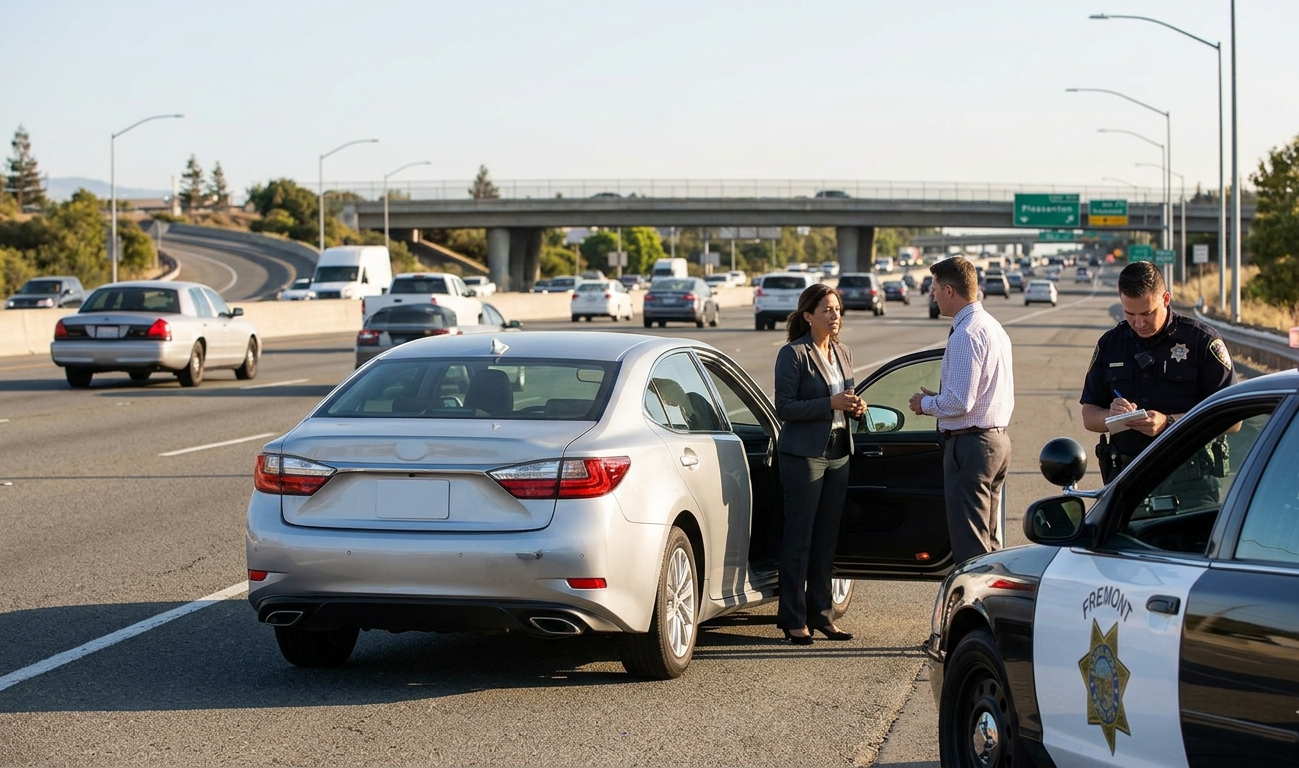
Pleasanton sits at the heart of the Tri-Valley, where two of Northern California’s busiest freeway corridors cross. Interstate 580 carries commuters east toward Livermore and the Altamont Pass and west toward Castro Valley and Oakland. Interstate 680 feeds south toward Dublin and north toward Walnut Creek and the entire I-680 spine. At the interchange where these two interstates meet in the Pleasanton-Dublin corridor, traffic density, high speeds, and lane-change complexity combine to create one of Alameda County’s most consistent collision environments.
If you were injured in a crash on I-580 or I-680 in or around Pleasanton, Dublin, or Livermore, the aftermath can feel overwhelming. Medical care, vehicle repairs, time off work, and competing insurance claims all demand attention at once. Working with an experienced personal injury lawyer Pleasanton families and Tri-Valley commuters trust can help you cut through the complexity, protect every legal deadline, and put your case in the strongest position from day one.
This guide explains how California’s fault and insurance framework applies to Tri-Valley freeway crashes, what happens when government road conditions contribute to a collision, and what injured people need to do to protect their rights.
Why I-580 and I-680 Through Pleasanton See So Many Serious Crashes
The Pleasanton-Dublin corridor is not just a local commuter route: it is a freight and regional transit nexus that carries a mix of passenger vehicles, commercial trucks, and delivery fleets throughout the day and into the night. Several factors compound to make this stretch particularly high-risk:
- High-volume interchange transitions: The I-580 / I-680 interchange requires rapid lane decisions over short distances, creating rear-end and sideswipe exposure at every peak hour.
- Commercial truck concentration: I-580’s role as an east-west goods-movement corridor means a significant share of traffic is large commercial vehicles, which produce more severe collision outcomes when they hit passenger cars.
- Commuter speed differentials: Vehicles entering from Airway Boulevard, Santa Rita Road, and Stoneridge Drive accelerate onto freeways already running at freeway speed, creating merge-point crashes.
- Construction and temporary lane configurations: Ongoing BART extension and regional infrastructure projects periodically shift lanes and reduce shoulders along the corridor.
- Distracted and fatigued drivers: Morning and evening rush hours on I-680 through Pleasanton include heavy Silicon Valley-to-East Bay commuter flows known for stop-and-go conditions that magnify inattention.
The result is a collision pattern that includes rear-end crashes, multi-vehicle pileups, commercial truck accidents, and intersection-adjacent crashes near the freeway off-ramps that feed into Pleasanton’s downtown and Hacienda Business Park.
California’s Fault Framework: How Liability Is Established in Tri-Valley Freeway Crashes
California is a pure comparative fault state under Civil Code §1714. That means every party to a collision (drivers, commercial vehicle operators, employers, and potentially government entities) can be assigned a percentage of fault, and damages are reduced accordingly. A driver who is found 20 percent at fault recovers 80 percent of their damages. A driver found 51 percent at fault still recovers 49 percent.
In freeway crashes, fault analysis typically focuses on:
- Speed: California Vehicle Code §22350 imposes a basic speed law requiring drivers to travel at a speed that is safe for current conditions, not just at or below the posted limit. Driving at 70 mph through dense fog or a sudden traffic backup can establish fault even when the driver is within the posted speed.
- Following distance: Vehicle Code §21703 requires drivers to maintain a reasonable and prudent following distance. Rear-end crashes are frequently traced to following too closely for the speed and conditions on I-580 or I-680.
- Lane changes: Vehicle Code §22107 requires drivers to make lane changes only when it can be done safely. Sideswipe collisions near the I-580/I-680 interchange often turn on which driver failed to yield during a merge.
- Commercial vehicle rules: Federal and California regulations require commercial carriers to maintain equipment, limit driver hours under Hours of Service rules, and adhere to weight limits. Violations can establish negligence per se.
Establishing fault quickly matters because evidence disappears fast on freeway corridors: traffic cameras are often overwritten within 24 to 72 hours, and event data recorders in commercial vehicles may not be preserved unless a legal hold is placed promptly.
The Insurance Picture After a Pleasanton Freeway Crash
Most I-580 and I-680 collisions involving private vehicles are handled through the at-fault driver’s liability policy. California’s minimum liability requirements under Insurance Code §11580.1b are $15,000 per person and $30,000 per accident, limits that are routinely exhausted by moderate injuries. When limits are inadequate, other sources of recovery may include:
- Underinsured motorist (UIM) coverage on the injured person’s own policy, which pays the gap between the at-fault driver’s limits and the injured person’s actual damages up to the UIM policy limit.
- Uninsured motorist (UM) coverage, which responds when the at-fault driver has no insurance or flees the scene.
- Employer liability under respondeat superior when the at-fault driver was operating a vehicle within the scope of employment. Commercial vehicles traveling I-580 or I-680 for business purposes frequently satisfy this test.
- Commercial trucking coverage, which typically involves higher per-occurrence limits than standard auto policies and requires rapid coordination with the carrier’s claims team.
- MedPay and health insurance for immediate medical costs while liability is being sorted out.
Proposition 213 and Uninsured Drivers
California’s Proposition 213, codified at Civil Code §3333.4, bars uninsured drivers from recovering non-economic damages (pain and suffering, loss of enjoyment, and emotional distress) even when the other driver was entirely at fault. Economic damages like medical bills and lost wages remain recoverable. This rule catches many injured people by surprise, and it is one of the first questions an experienced Pleasanton personal injury attorney will address at an initial consultation.
When Government Road Conditions Contribute to a Tri-Valley Crash
Not every I-580 or I-680 crash is caused entirely by the other driver. Dangerous road conditions (inadequate signage, faulty signals, road surface defects, improperly designed merge zones, or failed lighting) can make the government entity responsible for the roadway a contributing defendant.
Claims against California government entities, including Caltrans (responsible for I-580 and I-680) and Alameda County, follow a strict mandatory administrative claims process under the California Government Claims Act:
- A claim must be presented to the government entity within six months of the date of injury under Government Code §911.2. Missing this deadline generally forecloses the claim entirely.
- If the government entity rejects the claim, the claimant has six months from the date of rejection to file a lawsuit under Government Code §945.6.
- Claims based on a dangerous condition of public property are governed by Government Code §835, which requires proving the condition created a substantial risk of injury and the entity had notice.
Because the six-month government claims deadline runs independently of, and is much shorter than, the standard two-year personal injury statute of limitations, injured people who suspect a road condition contributed to their crash must act quickly to preserve this avenue of recovery.
Common Pleasanton and Tri-Valley Freeway Crash Scenarios (Hypothetical)
The following hypothetical examples illustrate how these legal issues can arise. They are not based on any specific client and are provided for educational purposes only.
Hypothetical 1: Rear-End at the I-580 / I-680 Interchange
A Pleasanton commuter is stopped in merging traffic at the I-580 westbound on-ramp near Santa Rita Road when a driver fails to reduce speed and rear-ends the vehicle at highway speed. The at-fault driver carries only minimum California liability limits. The commuter suffers a cervical disc herniation requiring surgery. After exhausting the at-fault driver’s $15,000 policy, the commuter’s own UIM coverage and employer-provided health insurance become critical secondary sources of recovery.
Hypothetical 2: Commercial Truck Lane Change on I-580
A box truck operating on behalf of a regional distributor changes lanes on I-580 near the Airway Boulevard exit without checking its mirrors and clips a passenger vehicle traveling in the adjacent lane. The impact causes the passenger vehicle to spin and collide with a highway barrier. Because the truck driver was acting within the scope of employment at the time of the crash, both the driver and the employer may be named as defendants, and the carrier’s commercial liability policy (which typically carries higher limits) may apply.
Hypothetical 3: Road Surface Defect Contributing to a Multi-Vehicle Crash
During a wet winter morning, a section of I-680 southbound near Bernal Avenue has standing water caused by a drainage defect that Caltrans had received prior complaints about. A driver hydroplanes and loses control, triggering a multi-vehicle collision. In addition to claims against the at-fault driver, injured parties may have a government claims basis against Caltrans under Government Code §835. The six-month government claims deadline requires a rapid case investigation.
Why Evidence Disappears Fast on Freeway Corridors
Freeway crash cases are evidence-intensive, and much of the most valuable evidence has a short shelf life:
- Traffic camera footage from Caltrans and local agencies is typically overwritten within 24 to 72 hours without a legal hold.
- Event data recorder (EDR) downloads from commercial vehicles must be secured quickly, as carriers sometimes argue the device was damaged or that data was overwritten in subsequent trips.
- Hours of service logs and electronic logging device (ELD) data for commercial drivers are subject to federal retention rules but can be lost when carriers are not promptly placed on legal hold.
- Witness information from other motorists at the scene is often the only way to reconstruct what happened when cameras were not positioned to capture the collision point.
- Cell phone records showing distracted driving require a subpoena, and the relevant data may be overwritten or deleted if legal action is not initiated promptly.
A prompt preservation letter to Caltrans, the commercial carrier, cell phone providers, and any business with surveillance cameras facing the corridor is one of the most valuable early steps an attorney can take.
How Long Do You Have to File a Personal Injury Claim in Pleasanton?
Most personal injury claims in California must be filed within two years of the date of injury under Code of Civil Procedure §335.1. Several important exceptions apply on I-580 and I-680 crash cases:
- Government entity claims: If Caltrans or another public agency contributed to the crash, a claim must be presented within six months under Government Code §911.2. This deadline runs from the date of injury, not from the date liability is confirmed.
- Minor claimants: When the injured person is under 18, the statute of limitations is generally tolled until the minor turns 18, subject to exceptions.
- UM/UIM claims: Uninsured and underinsured motorist claims are subject to policy-specific notice and demand provisions that can impose shorter deadlines than the underlying tort statute. These are easy to miss without legal guidance.
Because multiple deadlines may run simultaneously, the safest approach is to consult a Pleasanton personal injury attorney as soon as possible after a freeway crash, before any deadlines have a chance to expire.
How a Pleasanton Personal Injury Lawyer Can Help
Tri-Valley freeway crash cases involve layered insurance coverage, potential government defendants, commercial vehicle regulations, and tight evidentiary timelines. A trial-tested East Bay attorney can help by:
- Preserving camera footage, EDR data, and ELD records before they are overwritten
- Identifying every applicable insurance policy, including UIM coverage and commercial carrier policies
- Filing government claims within the six-month deadline when Caltrans or another public agency is a potential defendant
- Coordinating medical care and documentation so treatment gaps cannot be used against the injured person
- Handling multiple insurers simultaneously and pushing back on low offers
- Preparing the case for trial when carriers refuse to pay fair value
At Mirador Law, we handle serious injury cases throughout Alameda County and the Tri-Valley, and we treat every freeway crash case with the same intensity we bring to our largest trials. See our Pleasanton personal injury page for more on how we work with Tri-Valley clients, or visit our Newark injury page for additional information about our East Bay practice.
Conclusion
Crashes on I-580 and I-680 through Pleasanton involve multiple vehicles, commercial carriers, potentially inadequate road conditions, and short government claims deadlines that all demand fast, coordinated action. The strongest cases are built in the first days, when evidence is fresh, deadlines are intact, and the full insurance picture can still be mapped. Waiting costs options.
If you or a loved one was injured in a crash on I-580, I-680, or any Tri-Valley corridor, the team at Mirador Law is ready to listen. Call our Pleasanton office at (925) 460-8484 or our Newark office at (510) 785-8400 to discuss your situation in a confidential consultation.
Frequently Asked Questions
Who is at fault in a Tri-Valley freeway crash?
Fault depends on the specific facts: speed, following distance, lane changes, commercial vehicle compliance, and road conditions all play a role. California’s pure comparative fault system means multiple parties can share fault, and each party’s recovery is reduced by their assigned percentage.
What if the at-fault driver’s insurance is not enough to cover my injuries?
Underinsured motorist coverage on your own policy may pay the gap between the at-fault driver’s limits and your actual damages. Employer liability under respondeat superior and commercial carrier policies may also apply if the at-fault driver was working at the time of the crash.
Can I sue Caltrans if a road defect contributed to my crash on I-580 or I-680?
Yes, but you must present a government claim within six months of the date of injury under Government Code §911.2. Claims based on dangerous conditions of public property are governed by Government Code §835. Missing the six-month deadline generally forecloses the claim, so acting quickly is critical.
What evidence is most important in an I-580 or I-680 crash case?
Traffic camera footage, event data recorder downloads, hours of service logs for commercial drivers, witness contact information, and police reports are often the most critical pieces. Much of this evidence has a very short retention window and must be preserved through formal legal holds.
How long do I have to file a personal injury lawsuit in Pleasanton?
Most personal injury claims must be filed within two years of the date of injury under Code of Civil Procedure §335.1. Government claims against Caltrans or other public agencies must be presented within six months. UM/UIM claims may have policy-specific deadlines that are shorter still. Consult an attorney promptly to protect every deadline.
What is Proposition 213, and how does it affect my crash claim?
Under Civil Code §3333.4, an uninsured driver injured in an auto accident generally cannot recover non-economic damages such as pain and suffering, even if the other driver was entirely at fault. Economic damages like medical bills and lost wages remain recoverable. This rule applies even when the uninsured driver did nothing wrong.
Do I have a claim if I was a passenger in a vehicle that crashed on I-680?
Yes. Passengers generally have claims against any at-fault driver, including the driver of the vehicle they were riding in. UM/UIM claims may also be available if the at-fault driver was uninsured or underinsured.
What should I do right after a crash on I-580 or I-680?
If safely possible, move to a safe location, call 911, get medical attention, photograph all vehicles, the roadway, and any visible road conditions, collect witness contact information, and avoid giving recorded statements to any insurance company before consulting a personal injury attorney. Early medical documentation is critical.
Disclaimer
This article is for general informational purposes only and is not legal advice. Reading this content does not create an attorney-client relationship with Mirador Law. Every case is different, and outcomes depend on the unique facts and applicable law. If you believe you have a legal claim, consult a licensed California attorney about your specific situation.
Attorney Advertisement. Mirador Law, Pleasanton, CA. Past results do not guarantee future outcomes. Every case is unique and results depend on individual facts and circumstances.