

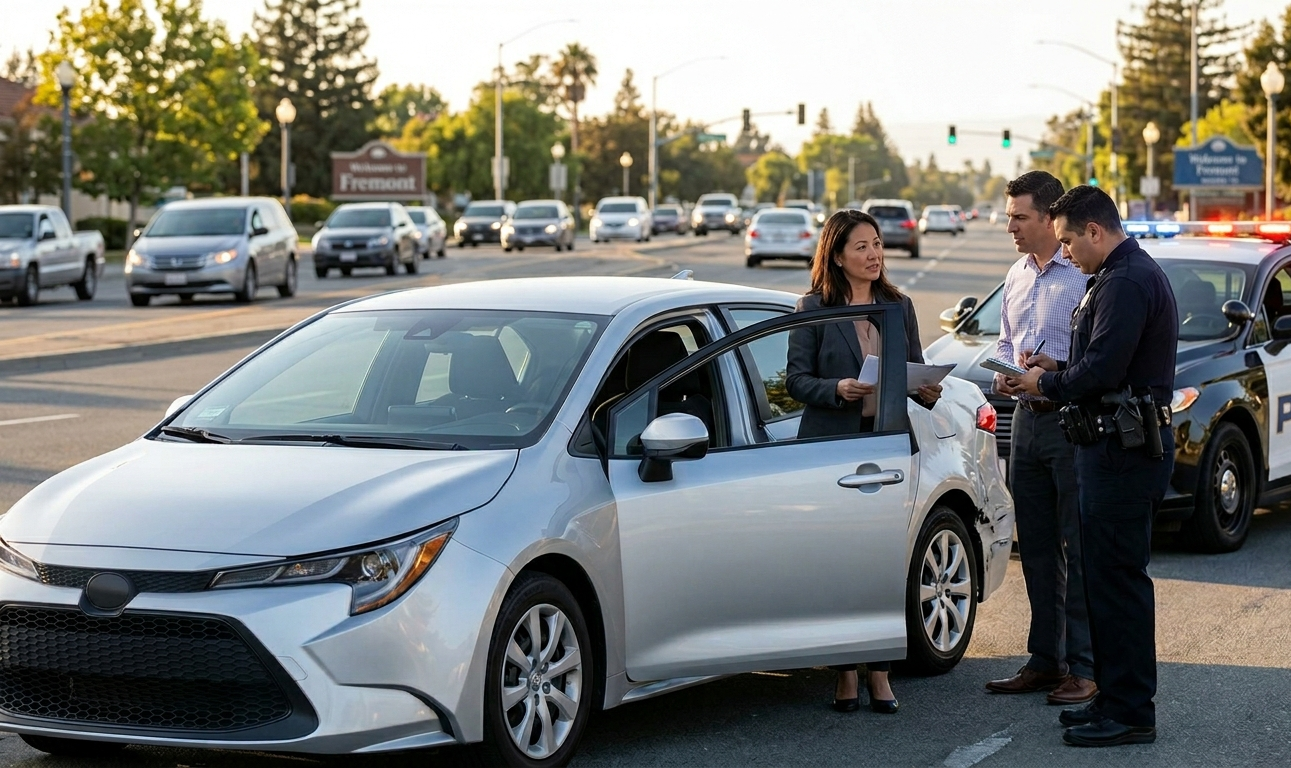
What Changed in California Rideshare Accident Claims in 2026? Uber and Lyft Insurance Rules Explained for Fremont Crashes
Fremont sits at the crossroads of some of the busiest commuter corridors in the East Bay. Between the Warm Springs and Fremont BART stations, the constant flow along Auto Mall Parkway, and the steady traffic feeding into I-880 and I-680, Uber and Lyft drivers are everywhere. For many residents, a rideshare is the quickest way to reach BART, Oakland International Airport, or a night out in Oakland or San Francisco. But when something goes wrong, the insurance picture can get confusing fast.
If you were hurt in an Uber or Lyft crash, you may already be facing a maze of insurance adjusters, conflicting policies, and questions about who is responsible. The rules changed again on January 1, 2026, after California enacted Senate Bill 371, and many injured people have no idea how the new law affects their claim. Working with a knowledgeable rideshare accident lawyer Fremont families trust can make the difference between a denied claim and meaningful compensation.
Here is what you need to know about how rideshare insurance works in California, what SB 371 actually changed, and what to do if you have been hurt.
How California’s Three-Period Rideshare Insurance Framework Works
California’s rideshare insurance framework lives in the Public Utilities Code, Chapter 8 (Transportation Network Companies). It divides rideshare coverage into three distinct periods, and the period a driver is in at the moment of the crash often controls which insurance policy responds. That is usually the first fight after any Uber or Lyft accident.
Period 1: App On, No Ride Accepted
This is the time when a driver has the app open and is waiting for a ride request. Coverage during this period is generally lower than during an active trip. If the driver causes a crash while in Period 1, the rideshare company’s contingent liability coverage may apply, but only after the driver’s personal policy is exhausted or denied.
Period 2: Driver En Route to Passenger
Once the driver accepts a ride and is on the way to pick someone up, coverage jumps significantly. The $1 million third-party liability policy applies, and additional protections come into play.
Period 3: Passenger in the Vehicle
This is the highest-coverage period and the one most relevant to injured passengers. The $1 million third-party liability policy continues to apply. Until January 1, 2026, this period also triggered $1 million in uninsured and underinsured motorist (UM/UIM) protection. That second protection is the one SB 371 changed.
Determining which period the driver was in often requires app data, trip logs, and driver records that only the rideshare companies control. That is one reason fast action after a crash matters.
How SB 371 Changed Rideshare Insurance in 2026
Effective January 1, 2026, SB 371 amended California’s Public Utilities Code and reshaped a critical part of the rideshare insurance framework: the UM/UIM coverage that protects passengers and others injured by uninsured or underinsured at-fault drivers during the on-trip period.
The Headline Numbers: $1,000,000 Down to $60,000 / $300,000
Under the previous framework, Uber and Lyft were required to maintain $1 million in UM/UIM coverage per person during the on-trip period. Starting January 1, 2026, SB 371 reduced that minimum to:
- $60,000 per person, and
- $300,000 per accident.
That is roughly a 94 percent reduction in per-person UM/UIM protection. The $1 million third-party liability policy that responds when the rideshare driver causes a crash is not changed by SB 371. Only the UM/UIM piece was cut.
In plain terms: if your Uber or Lyft is rear-ended by an uninsured driver fleeing a side street near the Fremont Hub or the Warm Springs BART exit in 2026, you may now have far less protection than you would have had in 2024 or 2025. This change has real consequences for injured passengers in Fremont, Newark, Union City, and across the Bay Area, where uninsured driver rates remain high.
When the $1 Million Liability Policy Still Applies
Despite the SB 371 cuts to UM/UIM, the $1 million third-party liability policy continues to apply in many of the most common scenarios:
- When the Uber or Lyft driver is in Period 3 and causes the crash that injures a passenger.
- When the rideshare driver is in Period 2 (en route to pick up a rider) and causes a crash that injures a third party, such as another motorist, pedestrian, or cyclist.
- When the rideshare driver, while in Period 2 or Period 3, causes a multi-vehicle collision on a corridor like Mission Boulevard or Mowry Avenue.
The harder cases tend to involve Period 1, when the app is on but no ride has been accepted, or situations where the rideshare company disputes that the driver was working at the time of the crash.
Reduced UM/UIM Limits Under SB 371: What They Mean for Injured Passengers
The UM/UIM reduction matters most when:
- The at-fault driver has no insurance.
- The at-fault driver carries only California’s minimum required coverage and the injuries are significant.
- The at-fault driver flees the scene and is never identified. Under California law, hit-and-run claims involving physical contact with the rideshare vehicle are generally treated as uninsured motorist claims; phantom-vehicle claims with no physical contact are subject to stricter requirements.
In each of these scenarios, a seriously injured passenger used to be able to look to a $1 million UM/UIM policy. After SB 371, that policy is capped at $60,000 per person. A single hospital stay, MRI, and short course of orthopedic treatment can easily eat through the entire new limit. That makes it more important than ever to identify every possible source of recovery, including:
- The passenger’s own auto policy, which may include UM/UIM coverage that can stack on top of the reduced rideshare limits.
- Household policies under which the injured person may qualify as a covered insured.
- Health insurance, MedPay, and other first-party benefits.
- Claims against third parties, such as commercial vehicle owners, employers under respondeat superior, or government entities responsible for dangerous road conditions.
A careful insurance audit early in the case is one of the most valuable things a personal injury attorney can do under the new SB 371 framework.
Common Fremont Rideshare Accident Scenarios (Hypothetical)
The following hypothetical examples illustrate how these rules can play out. They are not based on any specific client and are provided for educational purposes only.
Hypothetical 1: Passenger Injured During an Active Trip
A Fremont resident takes a Lyft home from Pacific Commons after dinner. The Lyft driver is rear-ended at a stoplight on Auto Mall Parkway by a driver who later turns out to be uninsured. The passenger suffers neck and back injuries. Because the Lyft driver was in Period 3, the $1 million third-party liability policy may respond if any fault is attributed to the Lyft driver, and the post-SB 371 UM/UIM limits ($60,000 per person, $300,000 per accident) would respond to the uninsured motorist’s share of fault. Stacking the passenger’s personal UM/UIM coverage may become critical.
Hypothetical 2: Pedestrian Struck by a Rideshare Driver En Route to a Pickup
An Uber driver heading from Warm Springs to a pickup near the Fremont BART station runs a stop sign and hits a pedestrian. Because the driver had accepted the ride and was in Period 2, the $1 million third-party liability policy generally applies to the pedestrian’s injury claim. SB 371 did not change that.
Hypothetical 3: Driver Claims the App Was Off
A Newark commuter is hit by a vehicle whose driver is later identified as a Lyft driver. The driver tells the responding officer the app was off. Phone records and trip data later show the app was actually in Period 1 at the time of the crash, which changes the coverage analysis significantly. A formal preservation request to Lyft is often necessary to secure that information.
Why Some Drivers Try to Rely on Personal Insurance Despite Being Active on the App
After a rideshare crash, drivers sometimes report the collision to their personal auto insurer rather than to Uber or Lyft. Some fear deactivation. Others mistakenly believe their personal policy covers all driving. Still others want to avoid being labeled an at-fault rideshare driver internally.
The problem is that most standard personal auto policies in California contain a livery or transportation network company exclusion. The personal insurer may deny coverage once it learns the driver was logged into the rideshare app at the time of the crash. The result is finger-pointing between insurers, which delays medical bill payment and pressures injured people to accept low settlements.
Why Evidence Preservation Matters After a Fremont Rideshare Accident
Rideshare cases turn on data that disappears quickly:
- App status logs and trip details
- GPS data and route history
- In-app communications between the driver and the passenger
- Dashcam footage from the rideshare vehicle or other vehicles
- Traffic camera and business surveillance footage near Fremont Boulevard, Mowry Avenue, or other busy corridors
A prompt preservation letter to Uber or Lyft, requests to nearby businesses for surveillance footage, and a police report containing accurate trip information can change the trajectory of a case. Without that early action, valuable evidence may be overwritten or routinely deleted.
How Long Do You Have to File a Rideshare Claim in California?
Most personal injury claims in California must be filed within two years of the date of injury under Code of Civil Procedure §335.1. Shorter deadlines may apply if a public entity is involved (six months to present a claim under Government Code §911.2), or under certain insurance policy terms. UM/UIM claims are also subject to policy-specific notice and demand requirements that can be much shorter than the underlying tort deadline. Quick legal advice protects every deadline at once.
How a Fremont Rideshare Accident Lawyer Can Help
Post-SB 371 rideshare cases combine insurance complexity, federal and state regulation, and serious physical injuries. A trial-tested East Bay attorney can help by:
- Identifying every applicable policy, including the reduced UM/UIM coverage and the injured person’s own stacking options
- Preserving app data, GPS records, and surveillance footage before it is lost
- Coordinating medical care so treatment gaps do not become defense arguments
- Negotiating with multiple insurers at once and pushing back on low offers
- Preparing the case for trial when insurance carriers refuse to pay fair value
At Mirador Law, we believe the courtroom is not just about laws, it is about lives. Our attorneys handle serious injury cases throughout Alameda County and the East Bay, and we approach every rideshare claim with the same care and intensity we bring to our largest cases. See our Newark and Pleasanton personal injury pages for more on how we work with Fremont-area clients.
Conclusion
California’s rideshare insurance system was already complicated before 2026. With SB 371 now reducing the on-trip UM/UIM minimum from $1 million to $60,000 per person, injured passengers and third parties in Fremont need to understand how their coverage has changed and what other sources of recovery exist. The strongest claims are built early, with quick evidence preservation, careful medical documentation, and a clear strategy for dealing with multiple insurers.
If you or a loved one was hurt in an Uber or Lyft crash anywhere in the Tri-Valley or the broader East Bay, the team at Mirador Law is ready to listen. Call our Pleasanton office at (925) 460-8484 or our Newark office at (510) 785-8400 to discuss your situation in a confidential consultation.
Frequently Asked Questions
Does SB 371 affect every Uber or Lyft accident in California?
SB 371 most directly affects UM/UIM minimums during the on-trip period. Whether and how it applies to your case depends on the driver’s status at the time of the crash, the at-fault party’s coverage, and other facts. A qualified rideshare accident lawyer can review the specifics.
How much UM/UIM coverage do Uber and Lyft now have to carry?
Starting January 1, 2026, SB 371 set the UM/UIM minimum at $60,000 per person and $300,000 per accident during the on-trip period, down from the prior $1 million requirement.
Does SB 371 reduce the $1 million liability policy too?
No. The $1 million third-party liability policy that responds when the rideshare driver causes a crash remains in place. SB 371 reduced only the UM/UIM (uninsured and underinsured motorist) protection.
Who pays my medical bills after an Uber or Lyft accident in Fremont?
Medical bills can be paid through several sources, including your own health insurance, MedPay coverage on auto policies, and ultimately the at-fault party’s liability insurance. In many rideshare cases, payment of bills is delayed until liability is sorted out.
What if the rideshare driver says they were not working at the time of the crash?
Drivers occasionally report that the app was off when it was actually active. App data, GPS logs, and trip records can confirm the truth. A formal preservation request to Uber or Lyft is often necessary to secure that information.
How long do I have to file a rideshare injury claim in California?
Most personal injury claims must be filed within two years of the date of injury under CCP §335.1. Shorter deadlines may apply for claims involving public entities or other unique facts.
Can I sue both the rideshare company and the at-fault driver?
In many cases, claims can be brought against multiple parties. Whether the rideshare company itself can be named depends on the specific circumstances and the legal theories available.
What should I do right after an Uber or Lyft crash in Fremont?
If safely possible, call 911, get medical attention, document the scene with photos, screenshot your trip details in the app, identify witnesses, and avoid posting anything on social media about the crash. Then speak with an experienced rideshare accident lawyer before giving a recorded statement to any insurer.
Disclaimer
This article is for general informational purposes only and is not legal advice. Reading this content does not create an attorney-client relationship with Mirador Law. Every case is different, and outcomes depend on the unique facts and applicable law. If you believe you have a legal claim, consult a licensed California attorney about your specific situation.
Attorney Advertisement. Mirador Law, Pleasanton, CA. Past results do not guarantee future outcomes. Every case is unique and results depend on individual facts and circumstances.